
Kitchen design has become a critical element of modern home aesthetics, reflecting not only personal taste but also lifestyle priorities. As we approach the mid-2020s, interior designers are increasingly vocal about certain layouts that have overstayed their welcome. Three specific design approaches are now being flagged as outdated, signalling a shift towards more intentional, warm, and functional spaces. Understanding why these layouts are falling out of favour can help homeowners make informed decisions about renovating or redesigning their culinary spaces.
Are open kitchens outpaced ?
The showroom effect of oversized open plans
Large open-plan kitchens, once the pinnacle of modern living, are now facing criticism from design professionals. These expansive spaces, whilst undeniably impressive, often create a disconnected atmosphere that feels more like a commercial showroom than a family gathering place. The issue lies not in the concept of openness itself, but in the execution and scale of these designs.
Designers observe that when kitchens sprawl across vast areas without defined zones, they lose their sense of purpose and intimacy. The cooking area becomes isolated within an ocean of square footage, making it difficult to maintain the social connection that modern families crave. This unbalanced approach creates spaces that look stunning in photographs but fail to function effectively in daily life.
The shift towards intentional zoning
The contemporary alternative focuses on purposeful spatial planning that maintains openness whilst creating subtle boundaries. Rather than eliminating walls entirely, designers now advocate for:
- Partial dividers that define spaces without closing them off completely
- Strategic furniture placement to create natural zones
- Architectural features like beams or ceiling variations to delineate areas
- Integrated seating areas that anchor the kitchen within the larger space
This approach ensures that the kitchen remains connected to adjacent living areas whilst maintaining its identity as a distinct, functional workspace. The emphasis is on creating intentional connections rather than simply removing barriers.
As the focus shifts from sheer size to thoughtful design, another long-standing kitchen staple is also coming under scrutiny.
The end of the kitchen island era
Rethinking the central fixture
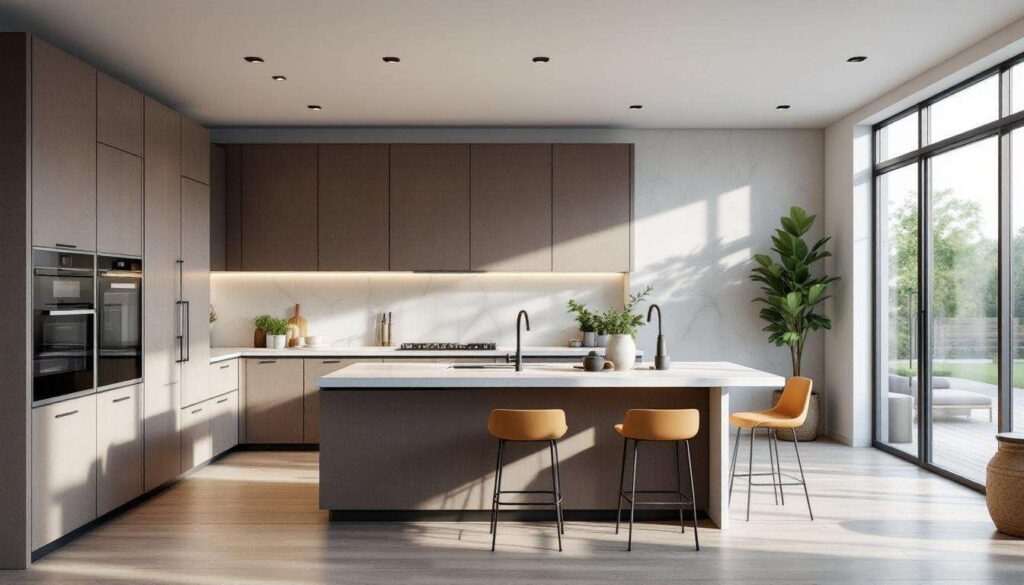
Kitchen islands have dominated residential design for decades, but their universal application is now being questioned. The problem isn’t the island concept itself, but rather the automatic inclusion of oversized islands in spaces where they don’t truly serve a purpose. Many homeowners have discovered that their impressive island actually impedes movement and creates bottlenecks rather than facilitating workflow.
Design experts note that islands often consume valuable floor space without delivering proportional functionality. In smaller kitchens, they can make the room feel cramped and awkward, whilst in larger spaces, they sometimes create excessive distances between work zones.
Functional alternatives gaining traction
The movement away from standard islands doesn’t mean abandoning central workspace entirely. Instead, designers are proposing more flexible solutions that adapt to individual needs:
- Mobile trolleys that can be repositioned as needed
- Peninsula configurations that maintain openness whilst providing workspace
- Integrated dining tables that serve multiple purposes
- Strategically placed prep stations along perimeter counters
These alternatives prioritise ergonomic efficiency and actual usage patterns over adherence to conventional design templates. The focus is on creating kitchens that work with, rather than against, the natural flow of daily activities.
Beyond layout considerations, colour choices are also undergoing a significant transformation.
White kitchens no longer appeal
The coldness of monochromatic schemes
All-white kitchens have reigned supreme for years, promising timeless elegance and bright, airy spaces. However, designers now recognise that these monochromatic schemes often result in environments that feel clinical and uninviting. The lack of visual warmth and depth creates spaces that, whilst clean, fail to evoke the comfort and personality that modern homeowners seek.
The issue with all-white kitchens extends beyond aesthetics. These spaces can appear uninspired and generic, lacking the character that makes a house feel like a home. They also show dirt and wear more readily, requiring constant maintenance to preserve their pristine appearance.
Embracing warmth and dimension
The contemporary approach incorporates earthy tones and natural materials to create depth and visual interest. Recommended alternatives include:
| Element | Outdated Approach | Modern Alternative |
|---|---|---|
| Cabinetry | Pure white throughout | Warm wood tones, soft neutrals |
| Accent colours | None or minimal | Navy blue, forest green, terracotta |
| Finishes | Glossy white | Matte, textured surfaces |
| Hardware | Chrome or brushed nickel | Matte black, brass, bronze |
By introducing layered colour palettes and varied materials, designers create kitchens that feel both sophisticated and welcoming. The combination of soft whites with wooden cabinetry, stone countertops, and strategic colour accents produces spaces with genuine character.
Whilst colour and layout are crucial, the overall styling approach also requires careful consideration.
The impact of cluttered kitchens
The farmhouse style saturation
The farmhouse aesthetic, characterised by shiplap walls, distressed finishes, and rustic accessories, has reached a point of market saturation. What once felt fresh and charming now appears formulaic and overdone. Design professionals note that this style has been replicated so extensively that it has lost its authentic appeal.
The problem isn’t with rustic elements themselves, but with the heavy-handed application of trendy features without consideration for balance or restraint. Kitchens overloaded with decorative items, open shelving displaying collections of mismatched items, and excessive vintage accessories create visual chaos rather than cosy charm.
Streamlined rustic approaches
The modern interpretation of rustic design embraces clean lines with subtle nods to traditional elements. This refined approach includes:
- Selective use of natural wood rather than covering every surface
- Matte black hardware as a contemporary alternative to aged brass
- Minimal open shelving with carefully curated displays
- Quality over quantity in decorative accessories
- Integration of modern appliances without attempting to disguise them
This evolution maintains the warmth of rustic design whilst eliminating the clutter that makes spaces feel dated and overwhelming. The emphasis is on intentional choices that contribute to both aesthetics and functionality.
As we move away from these outdated approaches, a new design philosophy is taking centre stage.
The rise of modern ergonomic kitchens
Prioritising workflow and comfort
Contemporary kitchen design places ergonomic principles at the forefront, recognising that beautiful spaces must also function efficiently. This approach considers the physical demands of cooking and the importance of reducing strain during daily tasks. Designers now carefully plan counter heights, appliance placement, and storage accessibility to create kitchens that support rather than hinder users.
The ergonomic focus extends to lighting, ventilation, and spatial relationships between key work zones. By analysing actual usage patterns, designers create layouts that minimise unnecessary movement whilst maximising efficiency.
Integrated social functionality
Modern ergonomic kitchens also address the social dimension of cooking and entertaining. The goal is to create spaces where food preparation doesn’t isolate the cook from family and guests. Key features include:
- Seating solutions integrated into the kitchen footprint
- Sight lines that maintain visual connection with adjacent spaces
- Accessible storage that keeps essentials within easy reach
- Surfaces designed for both food preparation and casual dining
This dual focus on physical comfort and social connection represents a fundamental shift in how kitchens are conceived and designed. The space becomes a hub for interaction rather than merely a functional workspace.
These practical considerations naturally lead to broader questions about personal expression in kitchen design.
Choosing personalised and welcoming kitchens
Moving beyond cookie-cutter designs
The rejection of dated layouts reflects a broader desire for authentic personalisation in kitchen design. Homeowners are increasingly rejecting template approaches in favour of spaces that reflect their individual lifestyles, cooking habits, and aesthetic preferences. This shift requires designers to engage more deeply with clients to understand their specific needs rather than applying standardised solutions.
Creating warmth through material choices
Achieving a welcoming atmosphere requires careful selection of materials and textures that add depth and character. Effective strategies include:
- Combining different wood species for visual interest
- Incorporating textured tiles for backsplashes and flooring
- Using matte metals that develop character over time
- Selecting stone surfaces with natural variation
- Integrating fabric elements through seating and window treatments
These layered material choices create kitchens that feel curated and lived-in rather than sterile and showroom-perfect. The goal is to design spaces that improve with use, developing patina and personality over time.
Kitchen design is evolving towards spaces that balance aesthetic appeal with genuine functionality and social purpose. By avoiding the pitfalls of oversized open plans, ubiquitous islands, and monochromatic colour schemes, homeowners can create kitchens that feel both contemporary and timeless. The emphasis on ergonomic design, personalisation, and warmth reflects a deeper understanding of how kitchens function within modern homes. These spaces are no longer just about cooking but about connection, comfort, and authentic self-expression. The most successful kitchens will be those that thoughtfully integrate practical needs with personal style, creating environments that genuinely enhance daily life.