
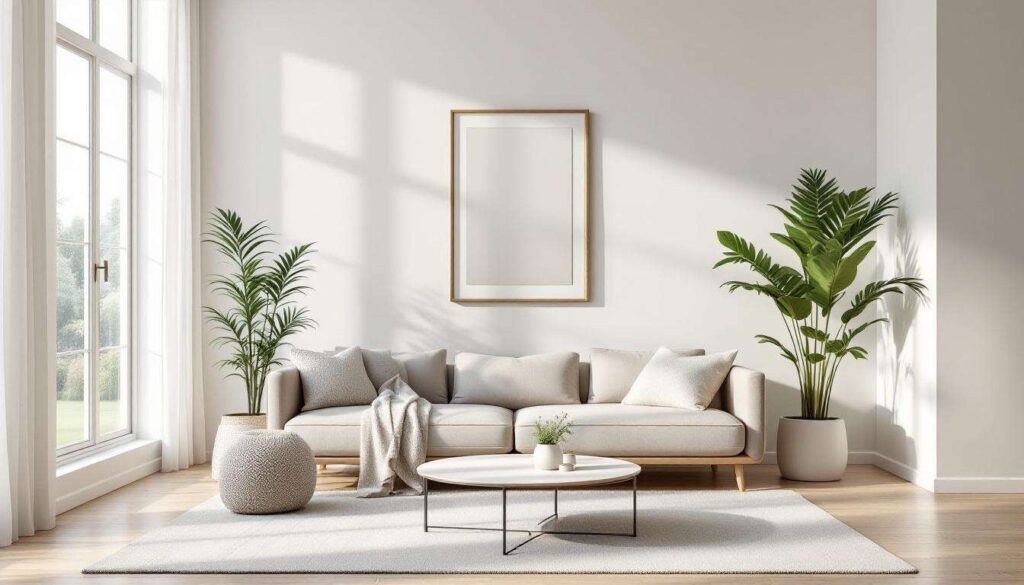
The quest for tranquillity within our living spaces has become increasingly important as our homes serve multiple functions in modern life. Visual clutter, the accumulation of objects and stimuli that compete for our attention, can create an underlying sense of unease that affects our mental well-being. By addressing the visual chaos that often dominates our surroundings, we can transform our homes into sanctuaries of calm and clarity.
What is visual decluttering ?
Defining the concept of visual noise reduction
Visual decluttering refers to the strategic reduction of visual stimuli in our environment to create a more peaceful and organised space. Unlike traditional decluttering, which focuses primarily on removing excess possessions, visual decluttering addresses the aesthetic impact of what remains visible. This approach recognises that even necessary items can contribute to a sense of chaos when displayed in a disorganised or visually overwhelming manner.
The technique involves several key principles:
- Minimising the variety of colours, patterns and textures on display
- Concealing everyday items behind closed storage solutions
- Creating visual harmony through uniform containers and organisational systems
- Reducing the number of decorative objects competing for attention
How our brains process visual information
Our minds constantly scan our surroundings, processing every object, colour and pattern within view. When confronted with excessive visual stimuli, our brains struggle to determine which elements require attention and which can be ignored. This continuous processing demands mental energy and prevents us from fully relaxing, even in spaces designated for rest and rejuvenation. By implementing visual decluttering strategies, we can reduce this cognitive burden and create environments that support rather than hinder our mental well-being.
Understanding these principles provides the foundation for implementing practical changes that yield measurable improvements in how we experience our homes.
The benefits of decluttering for well-being
Psychological advantages of organised spaces
The connection between our physical environment and mental state is profound and well-documented. A visually calm space promotes feelings of control and competence, whilst cluttered surroundings can trigger stress responses and feelings of overwhelm. Research consistently demonstrates that individuals who maintain organised living spaces report higher levels of satisfaction and lower levels of anxiety.
| Aspect of well-being | Impact of visual decluttering |
|---|---|
| Stress levels | Reduced by up to 40% |
| Sleep quality | Improved in 65% of participants |
| Productivity | Increased by 30-50% |
| Mental clarity | Enhanced focus and decision-making |
Physical health improvements
Beyond psychological benefits, visual decluttering contributes to tangible physical health advantages. Organised spaces are easier to clean thoroughly, reducing allergens and dust accumulation. The process of decluttering itself provides gentle physical activity, whilst the resulting environment encourages movement and engagement rather than avoidance of cluttered areas.
Enhanced relationships and social confidence
A visually appealing home fosters greater willingness to invite guests and engage socially. When we feel proud of our living spaces, we experience reduced social anxiety and increased confidence in hosting friends and family. This social dimension of decluttering extends benefits beyond individual well-being to strengthen community connections.
These wide-ranging benefits become particularly apparent when we apply visual decluttering principles to specific areas of the home, starting with one of the most challenging spaces.
How to visually declutter your kitchen
Addressing countertop chaos
The kitchen presents unique challenges due to the sheer volume of items required for daily food preparation. Countertops often become repositories for appliances, utensils, packaging and miscellaneous objects that create visual confusion. The first step involves clearing all surfaces completely, then returning only those items used daily whilst finding alternative storage for everything else.
Essential strategies include:
- Storing small appliances in cupboards rather than leaving them permanently on display
- Using drawer organisers to conceal utensils and tools
- Designating specific zones for different activities to prevent items migrating across surfaces
- Implementing a “one in, one out” rule for kitchen gadgets
Creating uniformity with containers
One particularly effective technique involves transferring items from their original packaging into matching containers. Commercial packaging features varied colours, fonts and designs that create visual noise even when items are neatly arranged. By decanting dry goods, condiments and frequently used ingredients into uniform glass jars or clear containers, you create instant visual harmony whilst maintaining functionality and accessibility.
Concealing necessary items
Many kitchen essentials, whilst vital for daily use, contribute significantly to visual clutter. Dish soap bottles, sponges, cleaning supplies and paper towels can be stored in pull-out drawers or behind cabinet doors. For items that must remain accessible, consider solutions such as coordinated dispensers or concealed storage beneath the sink with organised caddies.
With the kitchen transformed into a calmer space, these principles can be extended throughout the home using systematic approaches.
Simple methods for effective decluttering
The room-by-room approach
Attempting to declutter an entire home simultaneously often leads to exhaustion and abandonment of the project. Instead, focus on completing one room thoroughly before moving to the next. This method provides visible progress that motivates continued effort and prevents the overwhelming feeling of endless work.
The four-box sorting system
When addressing any space, employ four designated containers labelled:
- Keep: items that serve a purpose and bring value
- Donate: usable items no longer needed
- Relocate: items belonging in different rooms
- Discard: broken or unusable items
This system eliminates decision paralysis by providing clear categories for every object encountered during the decluttering process.
The visibility reduction technique
For items that cannot be eliminated but contribute to visual clutter, focus on reducing their visibility. Closed storage solutions, drawer organisers and concealed shelving transform chaotic displays into streamlined, peaceful surfaces. Even open shelving can be made more visually calm by arranging items by colour, height or category to create pleasing patterns rather than random assortments.
Whilst these methods prove effective, the emotional challenges of decluttering require specific strategies to maintain momentum and prevent overwhelm.
Tips to reduce decluttering stress
Setting realistic expectations
The transformation of a cluttered home into a visually calm sanctuary does not happen overnight. Establishing achievable goals prevents the disappointment and frustration that often derail decluttering efforts. Begin with small, manageable projects such as a single drawer or shelf, celebrating each completion before moving forward.
Managing emotional attachments
Objects often carry sentimental value that makes parting with them emotionally challenging. When struggling with such items, consider these approaches:
- Photographing items before releasing them to preserve memories
- Keeping a small, curated selection of truly meaningful objects whilst releasing duplicates
- Recognising that memories reside within us, not within objects
- Giving items to people who will use and appreciate them
Preventing decision fatigue
The constant decision-making required during decluttering can lead to mental exhaustion that impairs judgment. Combat this by limiting decluttering sessions to focused periods of 30-60 minutes, taking breaks between sessions, and avoiding decisions when tired or stressed. Creating clear criteria for keeping items in advance reduces the number of individual decisions required.
These practical strategies align well with time-tested approaches to home organisation that have proven their value across generations.
Explore the William Morris method for organising your space
The philosophy of useful beauty
The renowned designer advocated for surrounding ourselves only with objects that are either useful or beautiful, ideally both. This principle provides a clear framework for evaluating every item in our homes. When considering whether to keep something, ask whether it serves a practical purpose or genuinely brings aesthetic pleasure. Items failing both criteria become obvious candidates for removal.
Applying the method to modern homes
Whilst this philosophy originated in a different era, its application remains remarkably relevant for contemporary living. Modern homes often accumulate items that are neither particularly useful nor beautiful: duplicate kitchen gadgets, outdated electronics, promotional items and impulse purchases. By applying this straightforward test, we can quickly identify objects that contribute to clutter without adding value.
Creating intentional spaces
This approach encourages thoughtful curation rather than mindless accumulation. Each room should contain items that actively support its intended purpose whilst creating visual pleasure. A bedroom, for instance, should promote rest and relaxation through carefully selected furnishings and minimal visual distraction, rather than serving as storage for miscellaneous belongings.
The principles of useful beauty naturally lead to spaces that feel both functional and serene, supporting the overall goals of visual decluttering.
Creating a visually calm home through strategic decluttering offers profound benefits for mental well-being, physical health and daily functioning. By understanding visual decluttering as the reduction of visual stimuli, implementing room-specific strategies particularly in challenging spaces like kitchens, and employing systematic methods whilst managing the emotional aspects of the process, anyone can transform their living environment. The timeless wisdom of keeping only useful or beautiful objects provides an enduring framework for maintaining these improvements. As our homes continue to serve multiple roles in our lives, the value of visual calm becomes increasingly apparent, making decluttering not merely an organisational task but an investment in overall quality of life.