
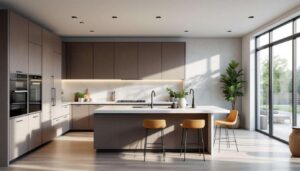


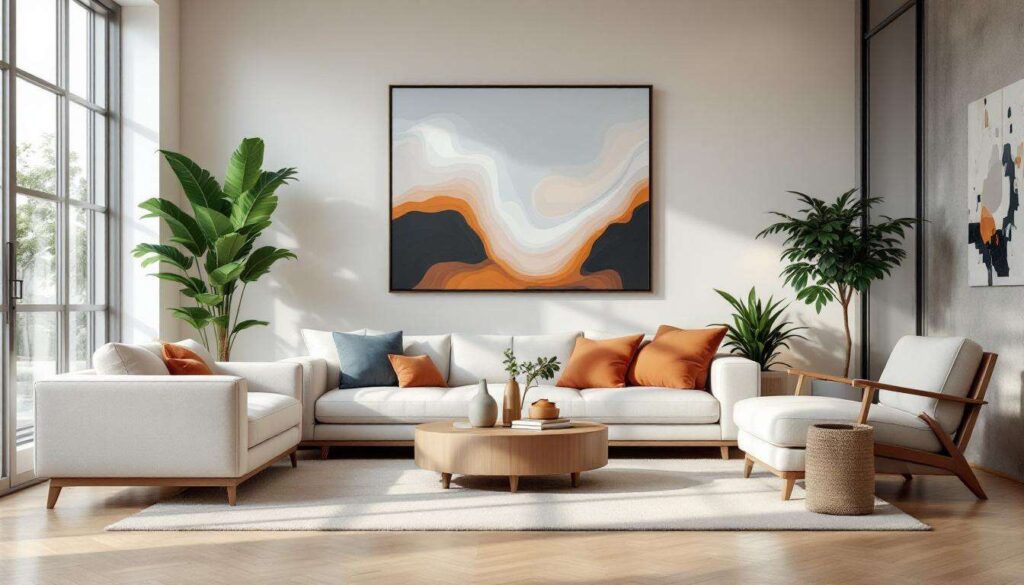
The furniture industry stands at a fascinating crossroads as designers and manufacturers respond to shifting consumer values and aesthetic preferences. After years dominated by stark minimalism and industrial aesthetics, a profound transformation is underway. Leading designers are championing approaches that prioritise emotional connection, tactile richness, and a renewed appreciation for heritage. These emerging trends reflect broader cultural movements towards sustainability, individuality, and the creation of living spaces that genuinely nurture well-being.
Courbes sculpturales et silhouettes douces
The departure from angular geometry
The dominance of sharp edges and rigid lines is giving way to furniture characterised by flowing, organic forms. This shift represents more than aesthetic preference; it reflects a deeper understanding of how physical environments influence psychological comfort. Curved sofas, rounded armchairs, and tables with sculptural silhouettes are becoming centrepieces in contemporary interiors.
Designers are drawing inspiration from mid-century modernism whilst incorporating contemporary materials and manufacturing techniques. The result is furniture that feels simultaneously familiar and innovative, bridging historical design movements with present-day sensibilities.
Psychological benefits of organic shapes
Research increasingly demonstrates that curved forms promote relaxation and social interaction. Unlike angular furniture that can create visual tension, rounded pieces encourage a sense of openness and flow within spaces. This quality proves particularly valuable in homes where multiple functions must coexist harmoniously.
- Enhanced comfort through ergonomic considerations
- Improved spatial flow and circulation
- Reduced visual harshness in compact environments
- Greater versatility in arrangement possibilities
This embrace of softer silhouettes naturally complements another significant development in contemporary furniture design: the materials from which these pieces are constructed.
Matériaux écologiques et durables
Environmental consciousness reshaping material selection
Sustainability has evolved from marketing buzzword to fundamental design principle. Designers are increasingly selecting materials based on their environmental impact, durability, and potential for responsible sourcing. This shift reflects consumer demand for furniture that aligns with ecological values without compromising aesthetic appeal.
| Material category | Key characteristics | Primary applications |
|---|---|---|
| Reclaimed wood | Unique patina, carbon-neutral | Tables, shelving, cabinetry |
| Bamboo | Rapid growth, structural strength | Chairs, frames, decorative elements |
| Recycled metals | Durability, industrial aesthetic | Legs, hardware, accents |
| Natural textiles | Biodegradable, tactile appeal | Upholstery, cushions, coverings |
The circular economy approach
Forward-thinking manufacturers are implementing circular design principles, creating furniture intended for disassembly, repair, and eventual recycling. This approach extends product lifecycles whilst reducing waste. Modular systems allow components to be replaced or upgraded rather than discarding entire pieces.
The emphasis on sustainable materials intersects meaningfully with renewed appreciation for traditional production methods and individual craftsmanship.
Artisanat et pièces faites à la main
Valuing human skill and uniqueness
Mass production’s homogeneity is being challenged by growing demand for handcrafted furniture that bears the marks of human creation. Consumers increasingly recognise that imperfections and variations represent authenticity rather than flaws. Each piece tells a story through visible joinery, hand-applied finishes, and subtle irregularities.
This trend supports local artisans and small workshops whilst offering buyers furniture with genuine character. The tactile quality of handmade pieces creates emotional connections that factory-produced items rarely achieve.
Traditional techniques meeting contemporary design
Skilled craftspeople are reviving time-honoured techniques such as:
- Mortise and tenon joinery for structural integrity
- Hand-carving for decorative detailing
- Traditional upholstery methods using natural materials
- Marquetry and inlay work for surface embellishment
- Blacksmithing for metal components and hardware
These methods produce furniture of exceptional quality and longevity, directly opposing disposable consumption patterns. Yet craftsmanship alone doesn’t define contemporary furniture; technological innovation plays an equally significant role.
L’intégration de la technologie dans le mobilier
Invisible technology enhancing functionality
The most successful technological integrations are those that remain visually unobtrusive whilst significantly enhancing functionality. Designers are embedding technology seamlessly into furniture forms, avoiding the aesthetic compromises that characterised earlier attempts.
Wireless charging surfaces integrated into tables, adjustable lighting concealed within shelving, and motorised mechanisms for height-adjustable desks represent this sophisticated approach. The technology serves human needs without dominating the design narrative.
Smart furniture responding to user needs
Advanced furniture now incorporates sensors and connectivity that adapt to user behaviour. Desks that remind users to change posture, seating that adjusts firmness based on duration of use, and storage systems with inventory tracking demonstrate how intelligence can be embedded thoughtfully.
| Technology type | Application | User benefit |
|---|---|---|
| Posture sensors | Office seating | Ergonomic health monitoring |
| Wireless charging | Tables, nightstands | Reduced cable clutter |
| Automated adjustment | Desks, beds | Personalised comfort settings |
| Ambient lighting | Shelving, cabinets | Mood enhancement |
Whilst technology offers standardised solutions, another powerful trend moves in the opposite direction, emphasising individual expression and bespoke creation.
Personnalisation et esthétique sur mesure
Moving beyond standard configurations
Consumers increasingly reject one-size-fits-all approaches, seeking furniture that reflects personal aesthetic preferences and accommodates specific spatial requirements. Manufacturers are responding with expanded customisation options, from fabric selections and finish choices to dimensional modifications and functional adaptations.
This trend acknowledges that living spaces vary dramatically in size, proportion, and character. Bespoke furniture addresses these variations whilst allowing owners to express individual style preferences.
Digital tools enabling personalisation
Advanced visualisation software allows customers to experiment with configurations, materials, and finishes before committing to purchases. This technology reduces uncertainty whilst empowering more confident design decisions.
- 3D rendering showing pieces within actual room photographs
- Material libraries with accurate colour and texture representation
- Dimensional customisation tools for spatial optimisation
- Style mixing capabilities combining different design elements
The emotional value of personalisation
Furniture created to individual specifications carries emotional significance beyond mass-produced alternatives. The investment of time and thought in selecting specific characteristics creates attachment and satisfaction. This emotional connection often translates into longer ownership periods and greater care, supporting sustainability objectives.
These five trends collectively represent a fundamental recalibration in furniture design philosophy. The movement away from cold minimalism towards warmth, character, and emotional resonance reflects broader cultural shifts. Curved forms provide psychological comfort, sustainable materials address environmental concerns, craftsmanship honours human skill, technology enhances functionality without visual intrusion, and personalisation enables individual expression. Together, these developments are creating furniture that serves not merely functional requirements but contributes meaningfully to well-being and quality of life. The homes we inhabit in the coming years will increasingly reflect these values, offering spaces that nurture, inspire, and authentically represent those who dwell within them.