



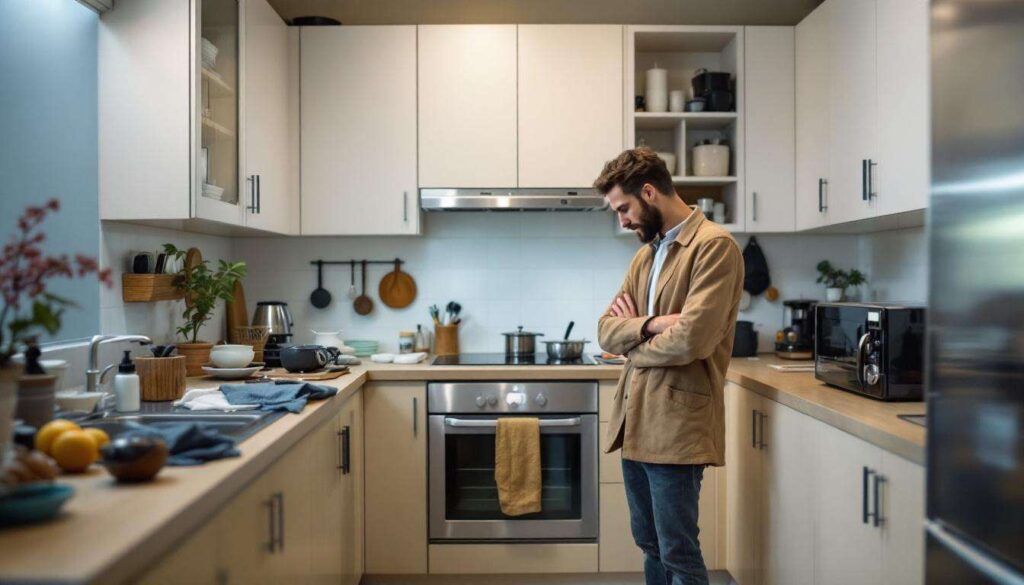
The kitchen stands as one of the most important rooms in any home, serving not only as a functional space for meal preparation but also as a gathering point for family and friends. Yet despite its central role, many kitchens fail to achieve the warm, inviting atmosphere that homeowners desire. Interior designers have identified several common pitfalls that can transform what should be a welcoming heart of the home into a cold, uninviting space. Understanding these issues and implementing thoughtful solutions can dramatically improve both the functionality and ambience of your kitchen.
Non-functional layout
The importance of the work triangle
A poorly planned layout represents one of the most significant factors contributing to an unwelcoming kitchen environment. The traditional work triangle connecting the hob, sink, and refrigerator remains a fundamental principle in kitchen design. When this triangle is disrupted or inefficiently configured, the space becomes frustrating to use, leading to a sense of discomfort and stress rather than relaxation and enjoyment.
Designers emphasise that the distances between these three key points should be neither too short nor excessively long. The ideal measurements typically fall between:
| Element | Recommended distance |
|---|---|
| Total triangle perimeter | 4 to 8 metres |
| Individual leg length | 1.2 to 2.7 metres |
Traffic flow considerations
Beyond the work triangle, traffic flow plays a crucial role in creating a welcoming atmosphere. A kitchen where multiple people cannot move comfortably or where pathways are constantly obstructed creates tension and frustration. Key considerations include:
- Ensuring adequate clearance between opposing units, typically at least 120 centimetres
- Avoiding placement of major appliances where doors might obstruct walkways
- Creating logical zones for food preparation, cooking, and cleaning
- Positioning frequently used items within easy reach
When the layout supports natural movement and efficient workflow, the kitchen automatically feels more inviting and pleasant to spend time in. This functional foundation sets the stage for addressing other atmospheric elements.
Inadequate lighting
Layered lighting strategy
Lighting represents perhaps the most transformative element in creating kitchen ambience, yet it remains one of the most commonly mishandled aspects. Designers warn against relying solely on harsh overhead lighting, which casts unflattering shadows and creates a clinical, institutional atmosphere. Instead, a layered approach incorporating multiple lighting types proves essential:
- Ambient lighting providing overall illumination
- Task lighting focused on work surfaces and preparation areas
- Accent lighting highlighting architectural features or decorative elements
- Decorative fixtures adding visual interest and personality
Colour temperature matters
The colour temperature of lighting significantly impacts how welcoming a kitchen feels. Cool, bluish light exceeding 5000 Kelvin creates a sterile environment, whilst warmer tones between 2700 and 3000 Kelvin foster a more inviting atmosphere. Installing dimmer switches allows flexibility to adjust lighting levels according to the time of day and activity, transitioning from bright task lighting during meal preparation to softer ambient lighting during dining or socialising.
Natural light should never be overlooked, as it provides the most flattering and welcoming illumination. Maximising window treatments that allow daylight whilst maintaining privacy enhances the overall atmosphere considerably. Proper illumination naturally leads to considerations about what occupies the physical space itself.
Excess furniture
Overcrowding the space
Many homeowners inadvertently make their kitchens feel cramped and unwelcoming by introducing too much furniture. Whilst the desire to maximise seating and storage is understandable, overcrowding creates visual chaos and restricts movement. Designers recommend carefully evaluating whether each piece of furniture serves a genuine purpose and whether it suits the available space.
Choosing appropriately scaled pieces
The scale of furniture relative to room dimensions proves critical. A large kitchen island might work beautifully in a spacious room but overwhelm a modest galley kitchen. Consider these guidelines:
- Measure the space carefully before purchasing any furniture
- Allow for comfortable circulation around all furniture pieces
- Select multifunctional items that serve multiple purposes
- Avoid blocking natural light sources with bulky furniture
An uncluttered kitchen with carefully selected, appropriately scaled furniture feels significantly more welcoming than one packed with pieces that impede movement and create visual confusion. Beyond furniture quantity, the condition and style of fixtures also substantially impact the overall atmosphere.
Outdated fittings
The impact of worn hardware
Outdated or deteriorating fittings send a clear message of neglect, making even an otherwise well-designed kitchen feel unwelcoming. Tarnished cabinet handles, dripping taps, and worn drawer runners not only function poorly but also create a sense of disrepair. Replacing these elements represents a relatively modest investment that yields significant returns in both functionality and aesthetics.
Modernising without complete renovation
Updating fittings need not require a complete kitchen overhaul. Strategic replacements can refresh the entire space:
- Installing contemporary cabinet hardware in coordinating finishes
- Upgrading to modern tap designs with improved functionality
- Replacing dated light switch plates and socket covers
- Fitting new appliance handles to match updated hardware
These relatively simple updates create a cohesive, cared-for appearance that immediately makes the kitchen feel more inviting. The physical condition of fittings connects closely with another visual element that profoundly affects atmosphere.
Using dark colours
The psychological impact of colour
Whilst dark colours can create dramatic sophistication in certain contexts, their inappropriate use in kitchens often results in spaces that feel oppressive and unwelcoming. Deep, saturated colours absorb light rather than reflecting it, making rooms appear smaller and darker. This effect proves particularly problematic in kitchens with limited natural light or modest dimensions.
Strategic colour application
This does not mean avoiding darker tones entirely, but rather using them strategically. Designers suggest:
| Application | Recommended approach |
|---|---|
| Wall colour | Light, neutral tones as foundation |
| Cabinetry | Mix of light and dark for contrast |
| Accent elements | Darker colours in small doses |
Lighter colours on walls and upper cabinets help reflect light throughout the space, whilst darker tones on lower cabinets or as accent colours add depth without overwhelming. The balance between light and dark proves crucial in creating an inviting atmosphere. Colour choices work in conjunction with another critical visual element.
Poor finishes
Quality of materials and workmanship
The quality of finishes throughout a kitchen dramatically affects how welcoming it feels. Cheap-looking materials, poorly executed paintwork, and mismatched elements create an impression of carelessness that undermines any welcoming atmosphere. Conversely, well-executed finishes in quality materials convey care and attention to detail.
Consistency and coordination
Creating a cohesive finish scheme requires attention to multiple elements:
- Ensuring paint finishes are smooth and professionally applied
- Selecting coordinating rather than perfectly matching materials
- Maintaining consistent quality levels across all elements
- Addressing any damaged or deteriorating surfaces promptly
- Choosing finishes appropriate to their function and location
High-traffic areas require durable, easily cleanable finishes, whilst decorative elements might accommodate more delicate materials. The tactile quality of finishes also matters; smooth, well-maintained surfaces feel more inviting than rough, damaged ones. Investing in quality finishes and proper installation creates a foundation of quality that permeates the entire space.
Transforming an unwelcoming kitchen into an inviting heart of the home requires addressing multiple interconnected elements. From establishing a functional layout that supports natural movement to implementing layered lighting that creates warmth, each aspect contributes to the overall atmosphere. Avoiding overcrowding with excess furniture, updating outdated fittings, using colour strategically rather than overwhelming the space with dark tones, and investing in quality finishes all work together to create a welcoming environment. By thoughtfully addressing these common pitfalls identified by designers, homeowners can create kitchens that not only function efficiently but also provide the warm, inviting atmosphere that makes them true gathering spaces for family and friends.