

The bedroom of Victoria Beckham has recently captured the attention of interior design enthusiasts and industry professionals alike. Through carefully curated imagery shared on social media, the fashion designer and entrepreneur has offered a glimpse into her personal sanctuary, revealing a space that epitomises the principles of quiet luxury. This aesthetic movement, characterised by understated elegance and meticulous attention to detail, continues to dominate the design landscape. Victoria’s approach to bedroom styling demonstrates how restraint and refinement can create an environment of unparalleled sophistication, proving that the most impactful statements are often made in whispers rather than shouts.
Victoria Beckham’s elegant bedroom style
A masterclass in sophisticated restraint
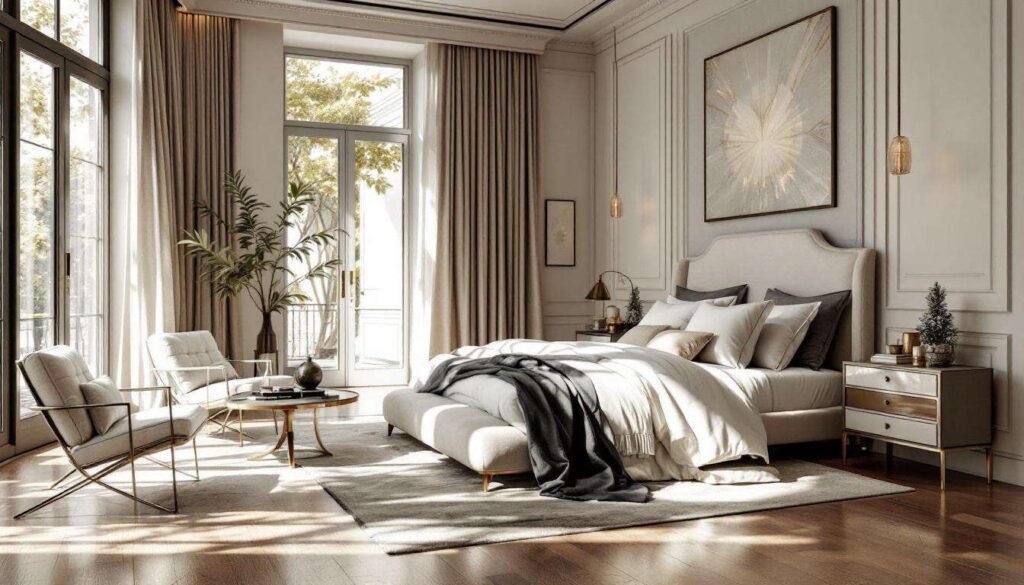
Victoria Beckham’s bedroom embodies a philosophy where less truly becomes more. The space showcases a carefully edited selection of elements, each chosen for its contribution to an overall sense of calm and luxury. Rather than overwhelming the senses with excessive ornamentation, the room relies on architectural integrity and thoughtful composition. The layout prioritises spaciousness, allowing each piece of furniture and decorative object to breathe and command attention without competing for visual dominance.
The power of neutral foundations
The colour palette serves as the foundation for the room’s tranquil atmosphere. Victoria has opted for a spectrum of soft neutrals that create a cocoon-like environment conducive to rest and relaxation. These tones work harmoniously to establish a backdrop that feels both timeless and contemporary, demonstrating how a restrained approach to colour can actually amplify the sense of luxury rather than diminish it.
This commitment to elegant simplicity naturally leads to examining the underlying principles that make this aesthetic so compelling and enduring.
Minimalism and elegance: the key aspects
The philosophy behind the aesthetic
The concept of quiet luxury in Victoria’s bedroom rests upon several fundamental principles that distinguish it from mere minimalism. This approach encompasses:
- Intentional curation rather than arbitrary reduction
- Investment in fewer pieces of superior quality
- Emphasis on craftsmanship and provenance
- Prioritisation of comfort without sacrificing aesthetics
- Attention to proportion and spatial harmony
Balancing function and beauty
Unlike stark minimalism, which can sometimes feel cold or impersonal, Victoria’s interpretation maintains warmth and livability. The space demonstrates that elegance need not be sacrificed for functionality. Storage solutions are seamlessly integrated, technology is discreetly concealed, and practical considerations are addressed without compromising the visual serenity. This balance represents the evolution of minimalist design into something more nuanced and human-centred.
| Design element | Traditional minimalism | Quiet luxury approach |
|---|---|---|
| Colour palette | Stark whites and greys | Layered neutrals with depth |
| Textures | Smooth, uniform surfaces | Varied, tactile materials |
| Atmosphere | Clinical, austere | Warm, inviting |
Understanding these principles provides context for examining the specific materials and colours that bring this vision to life.
Noble materials and soothing chromatics
The importance of material quality
Victoria’s bedroom showcases an unwavering commitment to exceptional materials that speak to discerning taste without shouting for attention. Natural fibres dominate the textile selections, with Egyptian cotton linens, cashmere throws, and silk accents creating layers of tactile luxury. These materials not only look refined but also improve with age, developing a patina that adds character rather than appearing worn.
Stone, wood and metal accents
The architectural elements and furnishings incorporate materials with inherent gravitas. Marble surfaces provide cool elegance, whilst carefully selected wood tones introduce warmth without disrupting the cohesive palette. Metal finishes, when present, lean towards brushed or aged treatments rather than high-shine options, maintaining the understated aesthetic whilst adding subtle visual interest through their reflective qualities.
The chromatic strategy
The colour scheme extends beyond simple beige or grey, incorporating a sophisticated range of tonal variations that create depth and interest. Cream, taupe, greige, and soft ivory work together to establish a foundation that feels neither cold nor overly warm. These hues are complemented by occasional deeper tones in accessories, providing just enough contrast to prevent monotony whilst preserving the overall sense of tranquillity.
These material and colour choices find their fullest expression in the carefully selected furniture and decorative objects that populate the space.
The refined choice of furniture and accessories
Investment pieces with lasting appeal
The furniture in Victoria’s bedroom represents a carefully considered collection rather than a matching set. Each piece appears to have been selected for its individual merit, yet they coexist harmoniously. The bed itself commands attention through its substantial presence and quality construction, likely featuring a bespoke upholstered headboard in a neutral fabric that provides both visual impact and practical comfort.
Functional art objects
Accessories are deployed with remarkable restraint, with each item serving both aesthetic and practical purposes. The selection demonstrates that quiet luxury does not mean absence of personality, but rather a more thoughtful approach to self-expression. Key elements include:
- Table lamps with sculptural bases in natural materials
- Oversized cushions in varied textures but harmonious tones
- Minimal artwork with maximum impact
- Fresh flowers or greenery in understated vessels
- Books displayed as both reading material and decorative objects
The role of lighting
Lighting design plays a crucial role in establishing the room’s atmosphere. Multiple sources at different heights create layered illumination that can be adjusted according to time of day and mood. Warm-toned bulbs prevent the neutral palette from feeling clinical, whilst dimmer switches allow for complete control over ambience.
This personal aesthetic choice reflects and reinforces broader movements within the design world that continue to shape our collective approach to interiors.
The influence of discretion on 2026 trends
Why quiet luxury endures
The persistence of this aesthetic into 2026 speaks to a fundamental shift in how we conceptualise luxury. In an era of information overload and visual noise, spaces that offer respite and calm have become increasingly valuable. Victoria Beckham’s bedroom exemplifies this trend, demonstrating that true luxury lies not in ostentation but in quality, comfort and considered design.
Cultural and economic factors
Several interconnected factors contribute to the continued dominance of quiet luxury. Environmental consciousness has made conspicuous consumption less socially acceptable, whilst economic uncertainty has increased appreciation for timeless investments over fleeting trends. Additionally, the desire for authenticity and substance over superficial display aligns perfectly with this design philosophy.
The broader design landscape
Beyond residential interiors, this aesthetic influences hospitality design, retail environments, and even fashion. The principles of restraint, quality and timelessness translate across disciplines, creating a cohesive cultural moment that values depth over flash. Victoria’s influence extends beyond her bedroom, shaping conversations about what constitutes good taste and meaningful luxury.
For those inspired by this approach, translating these principles into one’s own home requires understanding the fundamental strategies that make the aesthetic work.
Inspirations to adopt at home
Starting with a neutral foundation
Recreating elements of Victoria’s bedroom aesthetic begins with establishing a calm colour palette. This does not require a complete renovation but can be achieved through strategic updates. Consider repainting walls in sophisticated neutrals, investing in quality bedding in complementary tones, and removing items that disrupt the visual harmony. The goal is to create a cohesive backdrop that allows carefully chosen pieces to shine.
Prioritising quality over quantity
Rather than purchasing numerous inexpensive items, adopt a strategy of gradual investment in fewer, superior pieces. A single exceptional lamp will contribute more to the overall aesthetic than multiple mediocre options. Focus on items you interact with daily, such as:
- Premium bedding with high thread count
- A well-crafted bedside table in solid wood
- Quality curtains or blinds in natural fabrics
- One statement artwork rather than multiple small prints
- A comfortable reading chair in a timeless silhouette
Editing and refinement
Achieving quiet luxury often involves removing rather than adding. Assess your current bedroom contents critically, storing away items that do not contribute to the desired atmosphere. Clear surfaces, concealed storage, and thoughtful organisation all contribute to the sense of calm that characterises this aesthetic. Remember that empty space is not wasted space but rather an essential component of the overall design.
Victoria Beckham’s bedroom offers a compelling blueprint for creating spaces that prioritise serenity and sophistication. The enduring appeal of quiet luxury reflects our collective desire for environments that provide refuge from the chaos of modern life. By focusing on quality materials, restrained colour palettes, and carefully curated furnishings, this approach to design creates rooms that feel both timeless and contemporary. The principles demonstrated in this space remain accessible to anyone willing to embrace intentionality and patience in their design choices, proving that true elegance is not about budget but about discernment and commitment to lasting quality.