



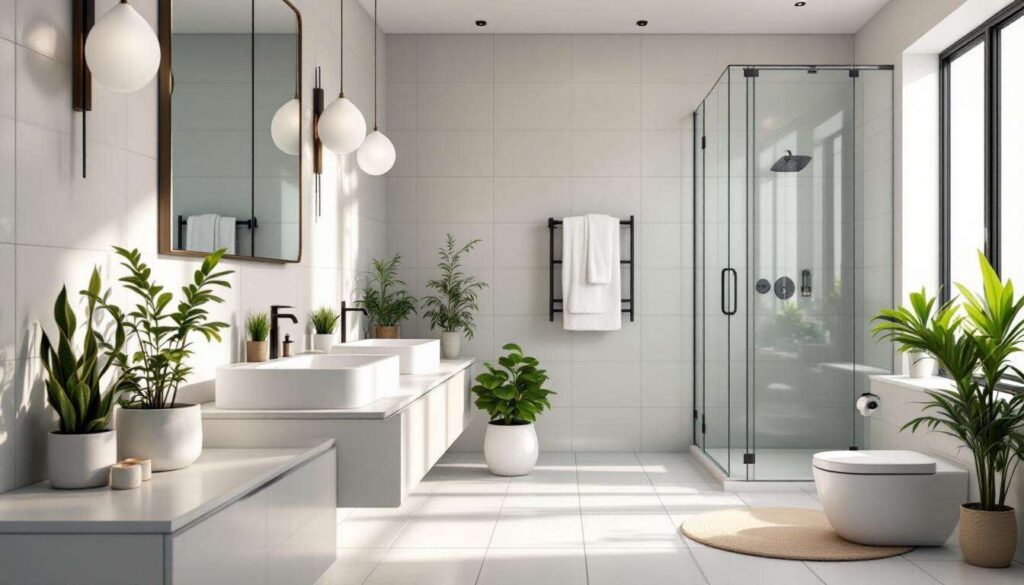
A tidy bathroom doesn’t happen by accident. Behind every pristine sink and organised shelf lies a deliberate approach to storage, design and maintenance. Those who consistently maintain spotless bathrooms share common habits and possessions that transform chaos into calm. These essential elements work together to create spaces that remain functional and visually appealing, regardless of daily use. Understanding what makes these bathrooms successful reveals practical strategies anyone can implement to achieve similar results.
Impeccable organisation of toiletries
The foundation of any tidy bathroom begins with systematic toiletry organisation. People with consistently neat bathrooms never allow products to accumulate haphazardly across surfaces. Instead, they employ specific containers and methods to keep everything accessible yet contained.
Categorised storage containers
Clear acrylic organisers dominate well-maintained bathrooms for good reason. These containers allow immediate visibility of contents whilst creating defined spaces for different product categories. Drawer dividers separate skincare from cosmetics, whilst countertop trays corral daily essentials. The key lies in assigning each product type its designated location, eliminating the guesswork that leads to clutter.
- Stackable bins for hair styling products
- Rotating carousels for skincare routines
- Magnetic strips for metal grooming tools
- Wall-mounted dispensers for frequently used liquids
- Labelled containers for cotton wool and cotton buds
The one-in-one-out principle
Tidy bathroom owners religiously follow this simple rule: for every new product purchased, an old one must leave. This prevents the gradual accumulation that transforms organised spaces into chaotic ones. They regularly audit their collections, discarding expired products and donating unused items. This discipline maintains both physical space and mental clarity.
This methodical approach to toiletries naturally extends to other bathroom textiles, where similar organisational principles prove equally effective.
Strategic storage of towels and linens
Towel management separates truly tidy bathrooms from merely acceptable ones. Those who maintain pristine spaces understand that proper towel storage impacts both aesthetics and functionality.
Folding techniques that maximise space
The hotel fold remains the gold standard for towel storage. This method creates uniform rectangles that stack efficiently whilst displaying the towel’s best side. Rolled towels work brilliantly in open shelving or baskets, creating spa-like visual appeal whilst conserving space. Consistent folding methods ensure cupboards remain neat even after repeated use.
| Storage method | Space efficiency | Visual appeal | Best location |
|---|---|---|---|
| Hotel fold | High | Very high | Closed cupboards |
| Rolled towels | Medium | Excellent | Open shelving |
| Hanging loops | Low | Moderate | Behind doors |
Designated towel rotation systems
Successful bathroom organisers maintain separate sets for different purposes: bath towels, hand towels, face cloths and guest towels each occupy distinct storage zones. They implement rotation schedules that ensure even wear and prevent musty odours from developing. Fresh towels move to the back of stacks whilst recently laundered ones go to the front, maintaining a constant cycle of freshness.
Beyond textiles, the physical infrastructure of storage itself demands careful consideration to maintain order.
Discreet and functional storage solutions
Visible clutter destroys bathroom tranquillity faster than anything else. Those with perpetually tidy bathrooms invest in storage solutions that hide necessities whilst keeping them accessible.
Utilising vertical space effectively
Wall-mounted cabinets, floating shelves and over-toilet storage units transform unused vertical space into valuable storage real estate. Recessed medicine cabinets provide substantial storage without protruding into the room. Tall, narrow cabinets fit into corners and beside vanities, maximising every centimetre without overwhelming the space.
Hidden storage opportunities
Clever bathroom organisers exploit overlooked storage locations:
- Behind-mirror cabinets that conceal daily essentials
- Vanity toe-kick drawers for flat items like scales
- Hollowed pedestal sink bases with concealed compartments
- Shower caddies with rust-proof coating and drainage holes
- Under-sink organisers with pull-out drawers
These solutions maintain visual simplicity whilst accommodating practical needs. Everything has its place, yet nothing intrudes on the bathroom’s aesthetic harmony.
Storage solutions work best when complemented by thoughtful colour choices that enhance rather than distract.
Use of soothing and harmonious colours
Colour psychology plays a significant role in perceived tidiness. Bathrooms that always appear organised typically feature carefully selected colour palettes that promote calm and make disorder more noticeable.
Neutral foundations with strategic accents
White, cream, soft grey and beige form the backbone of tidy bathrooms. These neutral bases create visual continuity that makes spaces feel larger and more cohesive. Against this backdrop, coloured towels, plants or artwork provide controlled pops of interest without overwhelming the senses. The restraint prevents visual chaos even when multiple items occupy the space.
Monochromatic coordination
Successful bathroom organisers often coordinate their accessories within a limited colour range. Matching soap dispensers, toothbrush holders and storage containers create unified visual flow. This doesn’t require everything to be identical, but maintaining similar tones or complementary shades produces a curated appearance that naturally looks more organised.
Colour choices set the stage, but the objects within the space ultimately determine whether tidiness prevails.
Minimalist decoration and well-chosen accessories
Tidy bathrooms embrace the principle that less truly is more. Every decorative element serves a purpose, whether functional or aesthetic, and nothing exists merely to fill space.
Quality over quantity
Rather than cluttering surfaces with numerous small items, organised bathroom owners select few but impactful pieces. A single substantial plant makes more impact than several struggling specimens. One beautiful soap dispenser outperforms a collection of mismatched bottles. This selective approach maintains visual calm whilst expressing personal style.
Multi-functional accessories
The most effective bathroom accessories serve dual purposes:
- Decorative baskets that store spare toiletries
- Attractive jars holding cotton wool balls
- Stylish hooks that function as towel storage
- Mirror cabinets combining reflection and concealment
- Ladder shelves providing display and storage
This pragmatic approach to decoration ensures that beauty and function coexist without compromising either aspect.
Even the most thoughtfully designed bathroom requires consistent maintenance to preserve its pristine condition.
Effective and frequent cleaning systems
The distinguishing factor between occasionally tidy and perpetually immaculate bathrooms lies in systematic cleaning routines. Those who maintain spotless bathrooms don’t work harder; they work smarter with established habits.
Daily maintenance rituals
Tidy bathroom owners perform small tasks daily that prevent major cleaning sessions. Wiping down the sink after use, hanging towels properly, returning products to their designated spots and quick toilet brush swishes take mere minutes but maintain baseline cleanliness. These micro-habits prevent the accumulation of grime and disorder that demands intensive correction.
Strategic placement of cleaning supplies
Accessibility determines whether cleaning actually happens. Successful bathroom maintainers keep cleaning supplies within arm’s reach, often in attractive containers that don’t detract from décor. Under-sink caddies hold essentials, whilst decorative bottles of daily cleaners sit discreetly on shelves. When tools are readily available, maintaining cleanliness becomes effortless rather than a chore requiring preparation.
| Cleaning frequency | Tasks included | Time required |
|---|---|---|
| Daily | Wipe surfaces, hang towels, replace items | 2-3 minutes |
| Weekly | Deep clean toilet, scrub shower, mop floor | 20-30 minutes |
| Monthly | Declutter, organise, wash bath mats | 45-60 minutes |
Maintaining a tidy bathroom requires commitment to several interconnected principles. Organised toiletries, strategically stored linens, discreet storage solutions, harmonious colours, minimalist accessories and consistent cleaning systems work together to create spaces that remain perpetually presentable. These elements don’t demand perfection but rather consistent attention to detail and deliberate choices about what enters and remains in the space. By adopting these practices, anyone can transform their bathroom from chaotic to calm, creating a sanctuary that supports daily routines whilst providing visual respite from life’s disorder.