

The kitchen has evolved from a purely functional space into the beating heart of modern homes, where culinary creativity meets social interaction and technological innovation. As homeowners increasingly seek to refresh their cooking environments, understanding the latest design movements becomes essential for creating a space that balances aesthetic appeal with practical functionality. From sustainable materials to cutting-edge smart technology, the contemporary kitchen makeover offers an exciting array of possibilities that cater to diverse tastes and lifestyles.
Kitchen trends in 2026
The evolution of culinary spaces
The modern kitchen landscape has undergone a remarkable transformation, reflecting broader shifts in how we live, work and entertain. Today’s homeowners prioritise spaces that seamlessly blend functionality with visual sophistication, creating environments that serve multiple purposes throughout the day. This evolution stems from changing lifestyle patterns, including increased home working and a growing emphasis on wellness and sustainability.
Several key factors are driving current design preferences:
- Enhanced focus on environmental responsibility and resource efficiency
- Integration of advanced technology for improved convenience
- Desire for personalised spaces that reflect individual character
- Emphasis on flexible layouts that accommodate various activities
- Growing appreciation for artisanal craftsmanship and natural materials
The influence of global design movements
Contemporary kitchen aesthetics draw inspiration from diverse cultural sources, creating a rich tapestry of design possibilities. Scandinavian minimalism continues to influence colour palettes and spatial organisation, whilst Japanese design principles contribute concepts of wabi-sabi and mindful simplicity. Mediterranean warmth manifests through earthy tones and textured surfaces, whilst industrial influences bring raw materials and exposed structural elements into residential settings.
These converging influences enable homeowners to craft truly distinctive spaces that resonate with their personal values and aesthetic sensibilities, setting the stage for more specific design considerations.
Eco-friendly and sustainable materials
Natural and renewable resources
Sustainability has moved from niche concern to mainstream priority, with environmentally conscious material selection becoming a defining characteristic of contemporary kitchen design. Bamboo cabinetry offers exceptional durability whilst regenerating rapidly, making it an increasingly popular alternative to traditional hardwoods. Reclaimed timber brings character and history into modern spaces whilst reducing demand for newly harvested materials.
Cork flooring provides natural insulation and antimicrobial properties, whilst recycled glass countertops transform discarded materials into stunning functional surfaces. These choices reflect a growing understanding that beautiful design need not compromise planetary wellbeing.
Low-impact manufacturing and sourcing
Beyond material selection, conscientious homeowners now consider the entire lifecycle of kitchen components. Locally sourced materials reduce transportation emissions, whilst products certified by recognised environmental standards ensure responsible manufacturing practices. Water-based finishes and low-VOC paints improve indoor air quality whilst minimising environmental harm.
| Material | Environmental benefit | Typical application |
|---|---|---|
| Recycled aluminium | 95% less energy than virgin production | Cabinet handles, fixtures |
| Reclaimed wood | Zero new harvest impact | Shelving, worktops |
| Recycled glass | Diverts waste from landfill | Countertops, backsplashes |
| Bamboo | Rapid regeneration cycle | Cabinetry, flooring |
This commitment to environmental stewardship naturally complements the aesthetic principles that define contemporary kitchen design.
Minimalist and sleek design
Clean lines and uncluttered surfaces
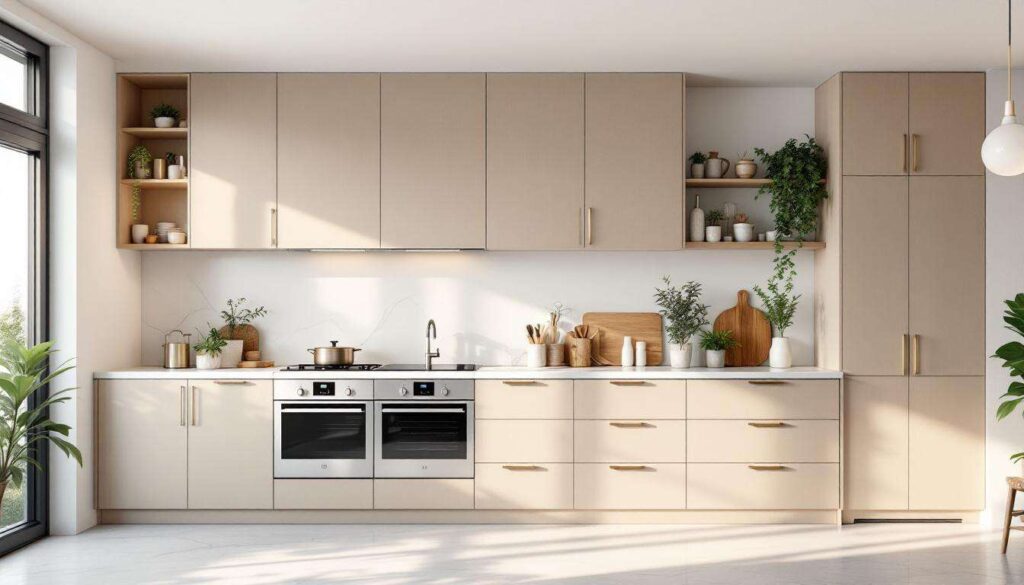
Minimalist design philosophy emphasises intentionality and restraint, creating serene environments that promote focus and calm. Handle-free cabinetry with push-to-open mechanisms eliminates visual clutter whilst maintaining accessibility. Integrated appliances disappear behind matching panels, preserving clean sightlines and cohesive aesthetics. Concealed storage solutions maximise functionality without compromising the streamlined appearance that defines this approach.
Neutral palettes and subtle contrasts
Minimalist kitchens typically employ restrained colour schemes that create visual harmony. Whites, greys and soft beiges form foundational palettes, occasionally punctuated by carefully considered accent elements. Monochromatic schemes create sophisticated depth through varied textures rather than contrasting hues. Natural materials like stone and wood introduce organic warmth without overwhelming the space’s tranquil character.
This aesthetic restraint creates an ideal backdrop for incorporating advanced technological features that enhance daily functionality.
Integrated technology and smart homes
Connected appliances and automation
Smart technology has revolutionised kitchen functionality, offering unprecedented convenience and efficiency. Voice-activated assistants control lighting, temperature and appliances through simple commands, whilst smart refrigerators track inventory and suggest recipes based on available ingredients. Induction hobs with precise temperature control ensure consistent cooking results, and automated extraction systems activate in response to cooking activity.
Energy monitoring and efficiency
Advanced technology enables homeowners to track and optimise resource consumption. Smart metres provide real-time energy usage data, whilst programmable appliances operate during off-peak hours to reduce costs. Water-efficient dishwashers and sensor-activated taps minimise waste without sacrificing performance.
- Smartphone-controlled lighting systems that adjust based on natural light levels
- Automated blinds that regulate temperature and reduce heating costs
- Smart ovens with remote monitoring and precise temperature management
- Integrated charging stations for mobile devices and tablets
These technological advances work harmoniously with bolder aesthetic choices that express personal style and creativity.
Bold colours and textures
Statement hues and accent walls
Whilst minimalism remains influential, many homeowners now embrace vibrant colour palettes that inject personality and energy into kitchen spaces. Deep jewel tones like emerald green and sapphire blue create dramatic focal points, particularly when applied to island cabinetry or feature walls. Warm terracotta and rust shades evoke Mediterranean warmth, whilst rich navy provides sophisticated depth without overwhelming smaller spaces.
Textural diversity and tactile appeal
Contemporary kitchens increasingly layer diverse materials to create visual interest and sensory richness. Matte finishes on cabinetry contrast beautifully with polished stone countertops, whilst textured tiles add dimensional complexity to backsplashes. Natural wood grain, hammered metals and woven textiles introduce organic elements that soften harder surfaces and create inviting atmospheres.
These expressive design choices find their fullest expression when paired with thoughtfully conceived spatial arrangements that maximise functionality.
Open and multifunctional culinary spaces
Breaking down traditional barriers
Open-plan layouts continue to dominate contemporary kitchen design, reflecting changing patterns of domestic life. Removing walls between cooking, dining and living areas creates fluid spaces that facilitate social interaction whilst maintaining distinct functional zones. Kitchen islands serve as natural transitions between areas, providing additional workspace whilst enabling conversation between cooks and guests.
Flexible zones for diverse activities
Modern kitchens accommodate far more than meal preparation, functioning as home offices, homework stations and entertainment hubs. Dedicated zones with appropriate seating, lighting and power outlets support these varied activities without compromising culinary functionality. Moveable furniture and modular storage systems adapt to changing needs throughout the day.
| Zone | Primary function | Key features |
|---|---|---|
| Preparation area | Food preparation and cooking | Ample worktop space, proximity to appliances |
| Social hub | Casual dining and conversation | Island seating, comfortable stools |
| Work station | Remote working and study | Power outlets, task lighting, storage |
| Pantry zone | Food storage and organisation | Walk-in storage, shelving systems |
This multifunctional approach ensures kitchens remain relevant and valuable as household needs evolve over time.
A successful kitchen refresh requires balancing aesthetic aspirations with practical considerations, environmental responsibility with personal expression, and technological innovation with timeless design principles. Whether embracing minimalist restraint or bold colour statements, prioritising sustainability or integrating smart technology, the most effective makeovers reflect the unique needs and values of those who inhabit these essential spaces. By thoughtfully considering these diverse design movements, homeowners can create kitchens that serve not merely as functional necessities but as genuine reflections of contemporary life and personal style.