
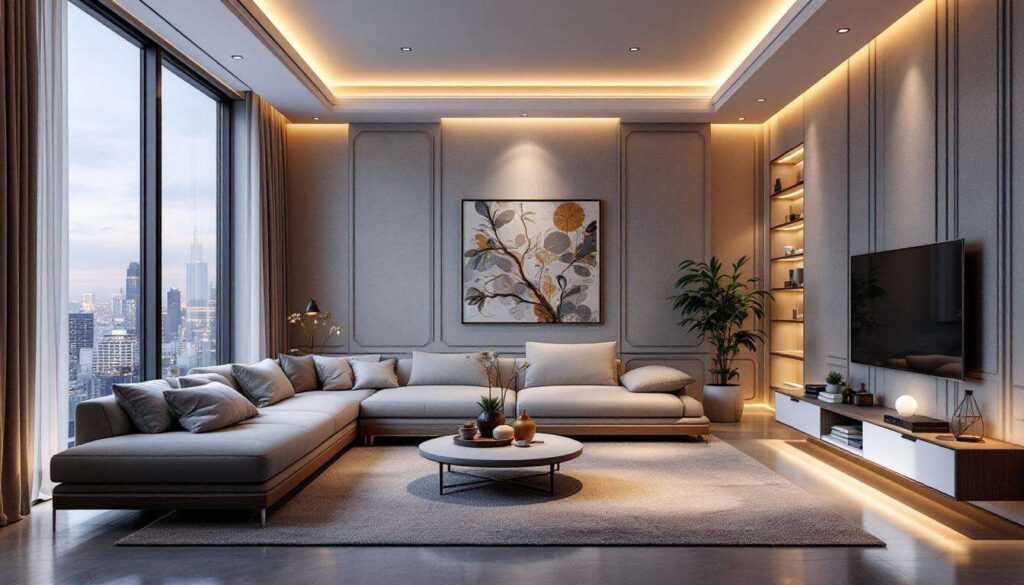
Interior design enthusiasts and homeowners alike have long appreciated the timeless elegance that wall panelling brings to any space. From Georgian townhouses to contemporary apartments, this architectural feature has adorned walls for centuries, adding depth, character and sophistication. Yet as design trends continuously evolve and shift, many wonder whether wall panelling maintains its coveted status amongst interior designers and style-conscious individuals. The answer, according to industry experts, reveals a fascinating picture of adaptation, innovation and enduring appeal that extends well beyond fleeting fashion moments.
Wall panelling trend in 2026: myth or reality ?
The sustained popularity of panelling
Wall panelling has firmly established itself as a permanent fixture rather than a passing trend. Design professionals consistently affirm that this architectural element continues to feature prominently in both residential and commercial projects. The key distinction lies not in whether panelling remains fashionable, but rather in how it is being implemented and interpreted within contemporary spaces.
Recent surveys indicate that homeowners increasingly seek features that provide lasting value and aesthetic appeal. Wall panelling satisfies both criteria by offering:
- Enhanced visual interest through texture and dimension
- Practical protection for walls in high-traffic areas
- Improved acoustic properties within rooms
- Increased property value through architectural detailing
Evolution rather than extinction
The transformation of wall panelling reflects broader shifts in interior design philosophy. Whereas previous iterations often followed rigid, formulaic patterns, current applications embrace personalisation and intentionality. Designers now encourage clients to select panelling styles that genuinely resonate with their individual aesthetic preferences rather than simply following prescribed trends.
This evolution manifests in several distinctive ways. Full-height panelling has gained considerable traction, particularly in dining rooms and hallways where it creates dramatic impact. Meanwhile, partial panelling continues to offer versatility for those seeking subtler interventions. The emphasis has shifted towards creating meaningful spaces that reflect personal narratives and emotional connections.
Understanding these aesthetic and practical benefits provides crucial context for anyone considering this design element.
The aesthetic and functional advantages of wall panelling
Visual impact and spatial transformation
Wall panelling possesses remarkable ability to transform ordinary rooms into sophisticated spaces. The vertical or horizontal lines created by panelling can visually alter room proportions, making low ceilings appear higher or narrow spaces feel wider. This optical illusion proves particularly valuable in compact urban dwellings where maximising perceived space becomes essential.
The textural dimension that panelling introduces cannot be overstated. Flat, featureless walls often lack visual interest, whereas panelled surfaces create shadow lines and depth that change throughout the day as natural light shifts. This dynamic quality ensures spaces never feel static or monotonous.
Practical benefits beyond aesthetics
Beyond visual appeal, wall panelling delivers tangible functional advantages:
| Benefit | Description | Application |
|---|---|---|
| Wall protection | Shields surfaces from impacts and scuffs | Hallways, staircases, children’s rooms |
| Thermal insulation | Adds extra layer reducing heat loss | External walls, older properties |
| Sound absorption | Reduces echo and noise transmission | Home offices, media rooms |
| Concealment | Hides imperfect wall surfaces or wiring | Period properties, renovations |
These practical considerations make panelling particularly appealing for period property renovations where original plasterwork may be damaged or uneven. Rather than undertaking extensive remedial work, well-chosen panelling can elegantly conceal imperfections whilst adding authentic character.
With these advantages established, attention naturally turns to the materials and styles that best suit contemporary interiors.
Materials and styles to adopt for a modern interior
Contemporary material choices
Modern wall panelling extends far beyond traditional timber options. Today’s market offers diverse materials catering to various budgets, aesthetic preferences and practical requirements:
- MDF panelling provides cost-effective versatility with smooth surfaces ideal for painted finishes
- Solid wood delivers authentic character with natural grain patterns and longevity
- Engineered wood combines stability with environmental credentials
- Water-resistant panels enable application in bathrooms and kitchens
- Acoustic panels merge sound management with decorative appeal
The selection of appropriate materials depends largely on the room’s function and environmental conditions. Moisture-prone areas demand water-resistant solutions, whilst living spaces benefit from materials that complement existing architectural features.
Design styles for contemporary spaces
Current panelling styles reflect diverse aesthetic movements. Shaker-style panelling remains perennially popular, offering clean lines and understated elegance that suits both traditional and contemporary settings. Its rectangular panel configuration provides visual interest without overwhelming spaces.
Vertical slat panelling has emerged as a particularly fashionable option, creating striking feature walls with modern appeal. The spacing between slats can be adjusted to achieve different visual effects, from subtle texture to bold geometric statements. This style works exceptionally well when painted in contrasting tones to surrounding walls.
For those seeking maximum impact, full-height panelling in rich, saturated colours creates luxurious, enveloping atmospheres. Dark greens, navy blues and charcoal greys prove particularly effective in dining rooms and studies where dramatic ambience enhances functionality.
However, achieving successful results requires awareness of potential pitfalls.
Errors to avoid when integrating wall panelling
Proportion and scale mistakes
One of the most common errors involves inappropriate scaling relative to room dimensions. Overly large panel configurations can overwhelm small spaces, whilst diminutive panels may appear insignificant in expansive rooms. The panel height and spacing should harmonise with ceiling heights and overall room proportions.
A useful guideline suggests that traditional dado-height panelling should typically reach approximately one-third of the wall height. However, this rule should serve as a starting point rather than absolute prescription, with adjustments made according to specific spatial characteristics.
Installation and finish considerations
Poor installation quality undermines even the finest materials and designs. Common technical errors include:
- Inadequate wall preparation resulting in uneven panel mounting
- Visible gaps between panels or at corners
- Misaligned horizontal or vertical elements
- Insufficient consideration for electrical outlets and switches
- Inappropriate adhesive or fixing methods for the chosen material
Paint finish selection also significantly impacts final results. Matt finishes create sophisticated, contemporary appearances whilst concealing minor imperfections. Conversely, gloss finishes highlight every detail and surface irregularity, demanding meticulous preparation and application.
Style coherence failures
Panelling should complement rather than conflict with existing architectural features and furnishings. Introducing ornate Victorian-style panelling into a minimalist Scandinavian interior creates jarring discord. Similarly, ultra-modern geometric panelling may feel inappropriate in period properties where sympathetic restoration proves more suitable.
Professional guidance can help navigate these potential pitfalls effectively.
Expert advice for successful decoration
Planning and preparation essentials
Interior design professionals emphasise the importance of thorough planning before commencing any panelling project. This includes creating detailed drawings showing panel dimensions, spacing and positioning relative to doors, windows and other architectural features. Digital visualisation tools enable homeowners to preview different configurations before making commitments.
Colour selection deserves particular attention. Whilst bold, saturated hues create dramatic impact, they also require confidence and commitment. Experts recommend testing paint colours on large sample boards positioned in the intended space, observing how natural and artificial light affects appearance throughout the day.
Professional versus DIY installation
The decision between professional installation and DIY approaches depends on several factors:
| Consideration | Professional installation | DIY approach |
|---|---|---|
| Cost | Higher initial investment | Lower material-only costs |
| Quality assurance | Guaranteed professional finish | Variable depending on skill level |
| Time requirement | Rapid completion | Extended project duration |
| Technical complexity | Handles challenging details | Suitable for straightforward applications |
For complex installations involving intricate details, awkward room configurations or valuable period properties, professional expertise typically justifies the additional expense. Simpler projects with standard room dimensions may suit competent DIY enthusiasts.
Looking ahead, panelling applications continue to evolve in exciting directions.
Towards an evolution in the use of wall panelling
Innovative applications and locations
Contemporary designers increasingly apply panelling in unexpected locations. Ceiling panelling creates striking visual interest overhead, drawing eyes upward and adding architectural dimension. This approach proves particularly effective in rooms with generous ceiling heights where traditional wall treatments alone may feel insufficient.
Exterior applications represent another emerging frontier. Weather-resistant slat panels enable homeowners to extend interior aesthetic coherence to outdoor spaces, creating seamless transitions between inside and outside. These installations require appropriate materials and protective treatments but deliver distinctive curb appeal.
Sustainability and environmental considerations
Environmental consciousness increasingly influences material selection. Sustainable timber sources, recycled materials and low-VOC finishes align panelling projects with broader ecological responsibility. Many manufacturers now offer certified sustainable options that deliver aesthetic appeal without environmental compromise.
The longevity inherent in quality panelling also contributes to sustainability. Unlike temporary decorative treatments requiring frequent replacement, well-installed panelling endures for decades, reducing long-term material consumption and waste generation.
Integration with smart home technology
Forward-thinking designers are exploring how panelling can accommodate modern technology. Concealed charging points, integrated lighting systems and acoustic panels with embedded speakers represent innovations that merge traditional craftsmanship with contemporary functionality. These developments ensure panelling remains relevant as homes become increasingly technologically sophisticated.
Wall panelling has conclusively demonstrated its enduring relevance within contemporary interior design. Rather than fading into obsolescence, this architectural feature continues evolving, adapting to changing aesthetic preferences whilst maintaining its fundamental appeal. The shift towards personalised, meaningful spaces has reinforced panelling’s value as a tool for creating character-filled environments that reflect individual identities. Whether through traditional applications or innovative interpretations, panelling offers versatility that transcends fleeting trends. The combination of aesthetic impact, practical benefits and adaptability ensures this design element will continue enhancing interiors for years to come. Success lies not in blindly following prescribed formulas but in thoughtfully selecting materials, styles and applications that genuinely resonate with specific spaces and personal preferences.