

As someone who spends every working day immersed in the world of interior design, I’ve witnessed countless trends come and go, observed the pitfalls of overambitious decorating schemes, and learned what truly transforms a house into a home. This year, rather than chasing fleeting fashions, I’ve committed to six practical decorating resolutions that address the most common challenges facing modern households whilst creating spaces that genuinely enhance daily life.
Simplifying the interior for more serenity
Embracing the power of decluttering
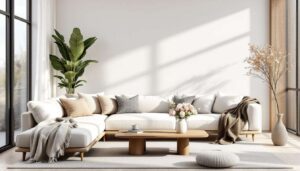
The first resolution centres on creating breathing room within our living spaces. After years of accumulating possessions, many homes suffer from visual overload that generates stress rather than comfort. I’m adopting a more intentional approach to what remains on display, keeping only items that serve a purpose or bring genuine joy. This doesn’t mean adopting stark minimalism, but rather curating belongings thoughtfully.
Establishing clear surfaces and open spaces
One practical strategy involves maintaining clear horizontal surfaces in key areas. Kitchen worktops, coffee tables, and bedside tables become magnets for clutter, so I’m implementing a daily reset routine. The benefits extend beyond aesthetics:
- Reduced cleaning time and effort
- Enhanced sense of calm and control
- Improved functionality of each room
- Better appreciation of remaining decorative pieces
This simplified approach naturally leads to considering how colour can enhance rather than overwhelm these pared-back spaces.
Dare to use colour harmoniously
Moving beyond neutral safety zones
For too long, I’ve recommended safe neutral palettes to clients whilst secretly admiring bolder chromatic choices. This year, I’m practising what I’ve long preached about colour theory by introducing carefully considered hues that create mood without chaos. The key lies not in avoiding colour but in understanding proportions and relationships.
Implementing the 60-30-10 rule
This classic design principle provides a foolproof framework for colour distribution:
| Percentage | Application | Example |
|---|---|---|
| 60% | Dominant colour | Wall paint, large furniture |
| 30% | Secondary colour | Upholstery, curtains, rugs |
| 10% | Accent colour | Cushions, artwork, accessories |
I’m applying this formula with a terracotta and sage palette in my living room, allowing warmth and freshness to coexist harmoniously. The accent colour, a deep ochre, appears in small doses through ceramics and textiles. Once colour establishes the mood, attention turns to maximising the physical space available.
Optimise space with clever storage solutions
Vertical thinking for compact rooms
Space constraints affect most homes, yet vertical real estate remains chronically underutilised. I’m installing floor-to-ceiling shelving in previously wasted alcoves and adding picture rails with hanging storage in the hallway. These solutions draw the eye upward, creating an illusion of greater height whilst providing practical storage.
Multi-functional furniture investments
Rather than purchasing single-purpose pieces, I’m prioritising furniture that works harder:
- Ottoman beds with integrated storage drawers
- Console tables that extend into dining tables
- Window seats with lift-up compartments
- Nesting tables that separate when needed
These dual-purpose investments prove particularly valuable in guest rooms and home offices where flexibility matters most. With storage addressed, the focus shifts to the tactile qualities that make spaces genuinely inviting.
Focus on natural materials for a cosy effect
Introducing organic textures
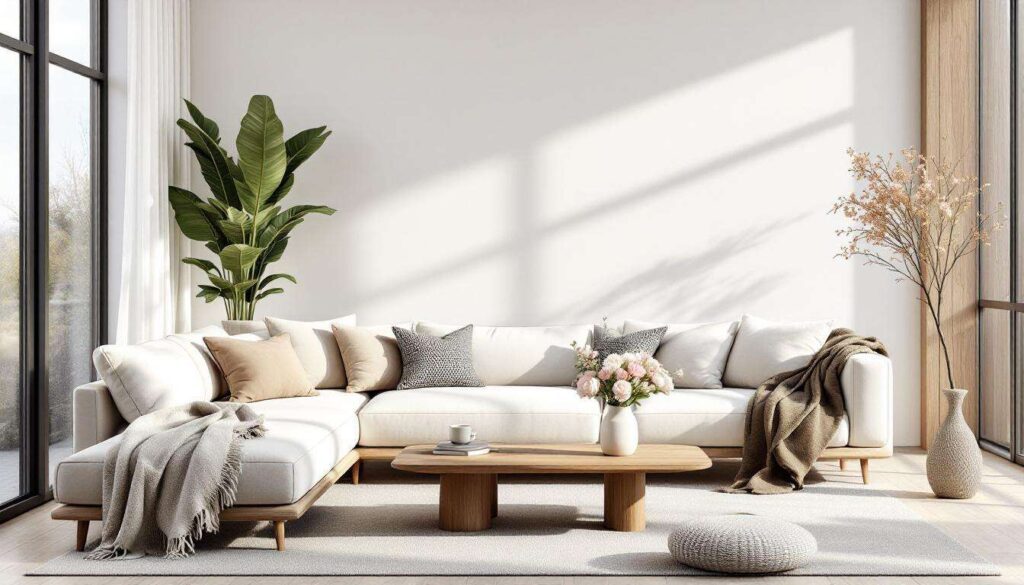
Synthetic materials dominate contemporary interiors, but I’m consciously incorporating natural elements that age gracefully and connect us to the outdoors. Linen curtains replace polyester, wool rugs supplant synthetic alternatives, and solid wood furniture takes precedence over laminated options. The sensory difference proves immediately noticeable.
Layering materials for depth
A single natural material can appear austere, but layering multiple textures creates richness and warmth. I’m combining rough-hewn timber with smooth stone, pairing chunky knit throws with sleek leather, and introducing woven baskets alongside ceramic vessels. This approach builds visual and tactile interest without relying on pattern or colour alone. These foundational materials provide the perfect backdrop for more personal touches.
Personalise with artwork and vintage objects
Curating meaningful collections
Generic mass-produced prints have occupied my walls for too long. I’m replacing them with original artwork from local artists, family photographs in quality frames, and vintage finds that tell stories. Each piece earns its place through personal connection rather than matching a colour scheme.
Creating gallery walls with intention
Rather than scattering individual pieces randomly, I’m developing curated gallery walls that group related items:
- Botanical prints in the dining room
- Black and white family photographs in the hallway
- Vintage travel posters in the study
- Abstract paintings in the bedroom
This thematic approach creates cohesion whilst celebrating individuality. As these personal touches establish character, modern conveniences enhance everyday functionality.
Integrate technology for a connected home
Smart solutions without aesthetic compromise
Technology often clashes with carefully planned interiors, but I’m selectively incorporating smart home features that enhance comfort without dominating visually. Voice-controlled lighting, hidden speakers, and discreet charging stations provide modern convenience whilst respecting the overall design aesthetic.
Balancing connectivity and wellbeing
The goal isn’t maximum automation but thoughtful integration that improves daily life. I’m installing programmable thermostats for energy efficiency, automated blinds for privacy and light control, and wireless charging points built into furniture. Crucially, I’m also designating technology-free zones where screens remain absent, preserving spaces for genuine relaxation and human connection.
These six resolutions represent a shift from aspirational decorating towards practical improvements that address real needs. By simplifying spaces, embracing colour confidently, maximising storage, prioritising natural materials, adding personal touches, and integrating technology thoughtfully, homes become more functional, beautiful, and genuinely reflective of those who inhabit them. The most successful interiors aren’t those that follow every trend but those that evolve intentionally, balancing aesthetic ambition with everyday practicality.