
The arrangement of furniture, the placement of decorative objects, and the choice of colours all contribute to the overall feel of a room. Among the many design principles that guide these decisions, symmetry stands out as one of the most powerful tools for creating spaces that feel balanced, harmonious, and visually appealing. Whether applied to a grand entrance hall or a cosy bedroom, symmetry offers a sense of order that resonates with our innate preference for balance and proportion.
The importance of symmetry in interior design
Creating visual harmony and order
Symmetry serves as a fundamental principle that brings visual harmony to interior spaces. When elements are arranged symmetrically, they create a sense of order that the human eye naturally finds pleasing. This arrangement helps to establish a calm and organised environment, which is particularly valuable in spaces where relaxation and focus are priorities. The balanced distribution of visual weight across a room prevents any single area from overwhelming the senses, allowing occupants to feel more comfortable and at ease.
Establishing focal points
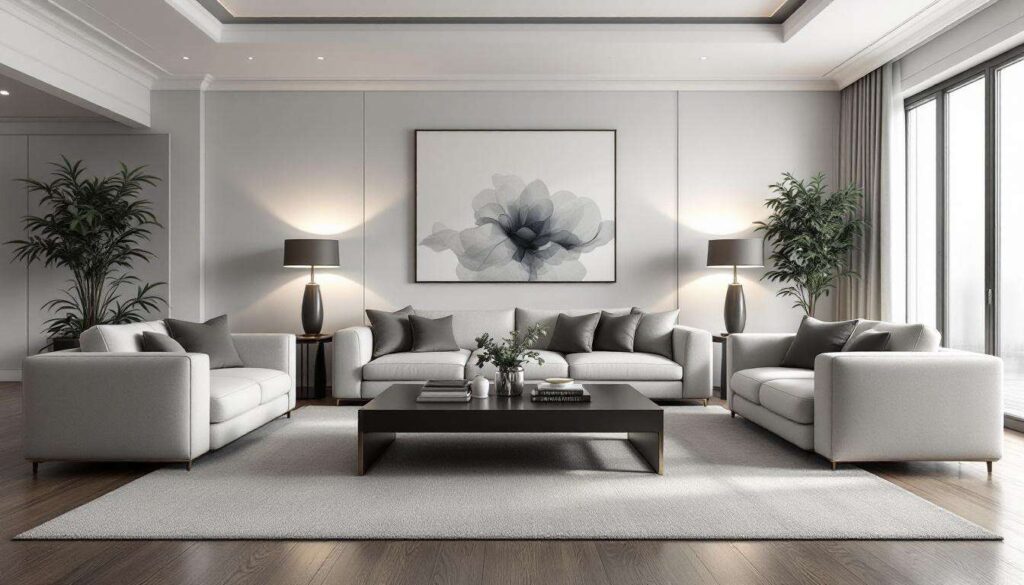
One of the most significant advantages of symmetrical design is its ability to naturally direct attention to key features within a room. By creating mirror images on either side of a central element, designers can emphasise architectural features or important furnishings. Consider the following applications:
- Flanking a fireplace with identical bookcases or cabinets
- Positioning matching table lamps on either side of a bed
- Arranging pairs of chairs around a central coffee table
- Hanging identical artwork on opposite walls
Enhancing architectural features
Many buildings are constructed with inherent symmetry, featuring centred doorways, evenly spaced windows, and balanced room proportions. When interior design embraces this architectural symmetry, it reinforces the structure’s integrity and allows the building’s natural beauty to shine through. This alignment between architecture and interior arrangement creates a cohesive aesthetic that feels intentional and well-considered.
Understanding these foundational benefits provides the groundwork for exploring how symmetry can be employed as a versatile creative instrument in design projects.
Symmetry as a creative tool
Establishing room hierarchy
Symmetry functions as an effective method for establishing hierarchy within a space. By positioning elements symmetrically around a central focal point, designers can clearly communicate which features deserve primary attention. This technique is particularly useful in formal spaces such as dining rooms, where a central table can be flanked by matching chairs, lighting fixtures, and serving furniture to create a sense of ceremony and importance.
Working with visual weight
The concept of visual weight plays a crucial role in symmetrical design. Objects with greater visual weight, whether due to size, colour intensity, or texture, appear heavier to the eye and must be balanced accordingly. Consider this comparison:
| Element type | Visual weight | Balancing strategy |
|---|---|---|
| Dark furniture | Heavy | Match with similarly dark pieces opposite |
| Large artwork | Heavy | Balance with equivalent-sized piece or grouped smaller items |
| Light textiles | Light | Pair with similar lightweight elements |
| Metallic accents | Medium | Distribute evenly across the space |
Creating emotional responses
Beyond its practical applications, symmetry has the power to evoke specific emotional responses. Formal symmetry tends to create feelings of stability, tradition, and sophistication, making it ideal for reception areas, dining rooms, and professional spaces. The predictability of symmetrical arrangements provides psychological comfort, as the brain expends less energy processing balanced visual information compared to chaotic or unbalanced compositions.
With these creative applications in mind, the next consideration involves the practical methods for implementing symmetrical arrangements effectively.
Tips for achieving a symmetrical layout
Identifying the central axis
The first step in creating a symmetrical layout involves identifying the room’s central axis. This invisible line typically runs through the middle of the space and serves as the reference point for all symmetrical arrangements. In most rooms, architectural features such as windows, doorways, or fireplaces naturally suggest where this axis should lie. Once established, all symmetrical elements should relate to this central line.
Mirroring furniture placement
Furniture arrangement offers the most obvious opportunity for symmetrical design. To achieve effective mirroring:
- Position identical pieces at equal distances from the central axis
- Ensure matching items are oriented in the same direction
- Maintain consistent spacing between paired elements
- Use furniture of similar scale and proportion on opposite sides
- Consider the sightlines from various entry points to the room
Incorporating patterns and textures
Patterns and textures provide additional layers of symmetry beyond furniture placement. Wallpapers with geometric or repeating motifs naturally reinforce symmetrical design principles. When selecting textiles such as curtains, cushions, or rugs, consider how their patterns can echo across the space. A striped rug positioned centrally, for instance, can emphasise the room’s axis whilst providing visual continuity.
Lighting considerations
Lighting fixtures present excellent opportunities for symmetrical arrangement. Matching wall sconces flanking a mirror, identical table lamps on bedside tables, or paired pendant lights over a kitchen island all contribute to balanced illumination whilst reinforcing symmetrical design. The functional benefit of even light distribution complements the aesthetic advantages of symmetrical placement.
These practical techniques lead naturally to considerations of how symmetry influences the perception and function of space itself.
Balancing space through symmetry
Managing room proportions
Symmetry proves particularly valuable when working with challenging room proportions. In narrow spaces, symmetrical arrangements can create the illusion of greater width by drawing the eye across the room rather than along its length. Conversely, in overly square rooms, symmetrical placement of furniture can help define distinct zones whilst maintaining overall cohesion.
Defining functional zones
Within open-plan spaces, symmetry helps establish clear boundaries between different functional areas. A symmetrically arranged seating area, for example, creates a distinct living zone within a larger room. This definition occurs without physical barriers, allowing the space to remain open whilst providing psychological separation between activities such as dining, relaxing, and working.
Addressing awkward features
Not all rooms offer perfect symmetry in their architecture. When confronted with off-centre windows, asymmetrical alcoves, or irregular shapes, designers can use intentional symmetrical arrangements to redirect attention. By creating a strong symmetrical focal point elsewhere in the room, awkward architectural features become less noticeable. This technique involves:
- Establishing a new visual centre away from irregular features
- Using bold symmetrical elements to command attention
- Balancing architectural asymmetry with furniture symmetry
- Creating visual weight that counteracts structural irregularities
Once spatial balance is achieved through symmetrical arrangement, the introduction of colour adds another dimension to the design scheme.
The association of symmetry and colour
Mirroring colour placement
Colour distribution plays a vital role in reinforcing symmetrical design. When colours are mirrored across a space, they strengthen the sense of balance and harmony. This doesn’t necessarily mean using identical colours on both sides; rather, it involves distributing colour weight evenly. A burgundy cushion on the left side of a sofa, for instance, might be balanced by a burgundy vase on the right side of the room.
Creating colour symmetry through repetition
Repetition of accent colours at regular intervals throughout a space creates a rhythmic quality that complements symmetrical arrangements. Consider these approaches:
| Colour strategy | Application method | Visual effect |
|---|---|---|
| Accent colour pairing | Matching cushions, artwork frames, or accessories | Reinforces symmetry subtly |
| Tonal gradation | Lighter shades centrally, darker at edges | Emphasises focal point |
| Complementary balance | Opposite colours in equal proportions | Creates dynamic equilibrium |
Using neutral foundations
A neutral colour palette provides an excellent foundation for symmetrical design, allowing the arrangement of elements to take precedence over colour drama. Whites, greys, and beiges create a calm backdrop against which symmetrical furniture placement becomes more apparent. Accent colours can then be introduced symmetrically to add interest without overwhelming the balanced composition.
Whilst symmetry offers numerous benefits, the most sophisticated interiors often incorporate elements of asymmetry to prevent monotony and add visual interest.
Symmetry and asymmetry: a winning duo
Breaking symmetry intentionally
Perfect symmetry, whilst orderly, can sometimes feel rigid or sterile. Strategic breaks in symmetrical arrangements introduce vitality and prevent spaces from appearing too formal or museum-like. This might involve placing an asymmetrical artwork above a symmetrically arranged console table, or introducing a single statement chair alongside a pair of matching seats.
Layering asymmetrical elements
Within a fundamentally symmetrical framework, asymmetrical details add personality and visual intrigue. Consider these combinations:
- Symmetrical furniture arrangement with asymmetrically styled shelving
- Matching table lamps with different book stacks beneath them
- Identical chairs upholstered in subtly different fabric patterns
- Symmetrical wall panelling with an off-centre gallery wall
- Paired windows dressed identically but with asymmetrical curtain tiebacks
Achieving dynamic balance
The most successful interiors often employ what designers call dynamic balance, where symmetrical and asymmetrical elements coexist harmoniously. This approach maintains the psychological comfort of symmetry whilst introducing the energy and movement of asymmetry. A symmetrically arranged living room, for example, might feature an asymmetrically placed floor lamp or an irregularly shaped coffee table that adds interest without disrupting the overall sense of balance.
Knowing when to use each approach
Different spaces benefit from different balances of symmetry and asymmetry. Formal areas such as entrance halls, dining rooms, and master bedrooms typically favour stronger symmetry, whilst creative spaces like home offices, children’s rooms, and casual living areas can accommodate more asymmetrical elements. The key lies in understanding the room’s purpose and the emotional response you wish to evoke.
Symmetry remains one of the most accessible yet powerful tools available to anyone seeking to create balanced, harmonious interiors. By understanding its principles and applications, from establishing focal points to managing visual weight, designers and homeowners alike can transform ordinary spaces into environments that feel both intentional and welcoming. The strategic use of colour reinforces symmetrical arrangements, whilst the thoughtful incorporation of asymmetrical elements prevents rigidity and adds character. Whether applied comprehensively or selectively, symmetry provides a reliable foundation upon which beautiful, functional interiors can be built, proving that this timeless principle continues to hold relevance in contemporary design practice.