


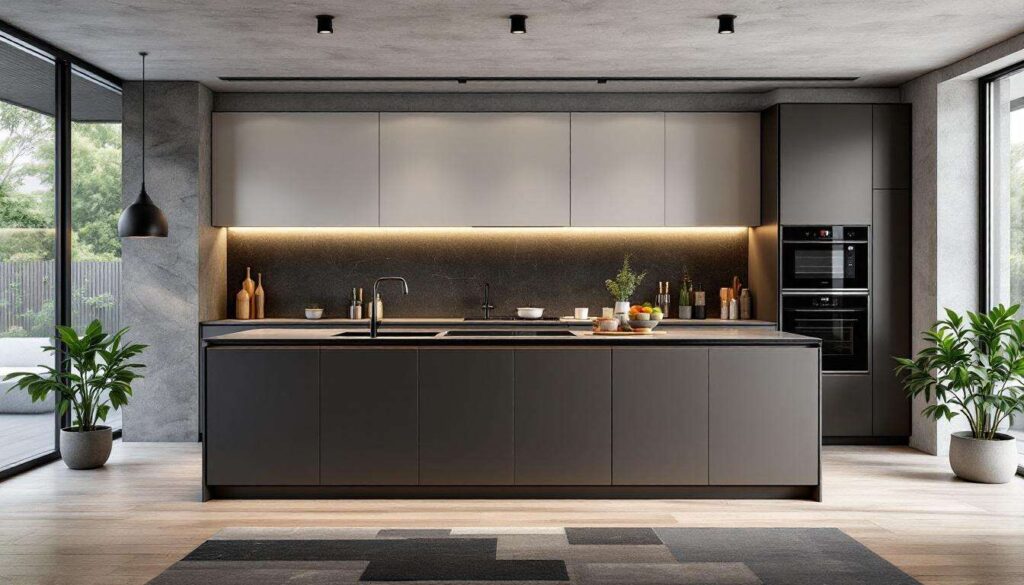
The kitchen has long been considered the heart of the home, and for years, the island has reigned supreme as the centrepiece of modern culinary spaces. However, a significant shift is underway as homeowners and designers alike are questioning the practicality of this once-coveted feature. As living spaces become more compact and lifestyles evolve, a fresh approach to kitchen design is emerging that prioritises functionality over status symbols. This movement challenges conventional wisdom and offers solutions that better suit contemporary needs, proving that sometimes less truly is more when it comes to creating efficient, welcoming cooking environments.
Farewell to kitchen islands: the trend reshaping our homes
The kitchen island has dominated interior design magazines and property listings for decades, but its reign is coming to an end. This transformation reflects a broader reassessment of how we use our homes, with practicality and flexibility taking precedence over traditional design conventions.
The rise and plateau of island dominance
Kitchen islands became synonymous with luxury and modern living during the late twentieth century. They represented open-plan living at its finest, offering additional workspace, storage, and a social hub where families could gather. Property developers installed them as standard features in new builds, whilst homeowners undertook costly renovations to accommodate these substantial structures. The island became a status symbol that signalled a certain lifestyle and level of sophistication.
However, the reality of living with a kitchen island has proven less glamorous than the glossy photographs suggested. Many homeowners discovered that these fixtures consumed valuable floor space without delivering proportional benefits, particularly in smaller properties where every square metre counts.
Current design philosophy shifting priorities
Contemporary design thinking emphasises adaptability and intelligent space utilisation rather than rigid adherence to trends. Designers are now advocating for solutions that acknowledge the diverse ways people actually use their kitchens, rather than imposing a one-size-fits-all approach. This philosophical shift recognises that:
- Not every household requires extensive entertaining space
- Circulation and movement matter more than static features
- Flexibility allows spaces to serve multiple purposes
- Smaller footprints can deliver greater functionality
This evolving perspective naturally leads to questions about what alternatives might better serve modern households.
Why kitchen islands are falling out of favour
Several compelling factors have contributed to the declining popularity of kitchen islands, ranging from practical considerations to changing social dynamics.
Space constraints in modern properties
The average size of new-build properties has decreased considerably, making the generous clearances required for islands increasingly impractical. Design guidelines typically recommend at least one metre of clearance around all sides of an island to ensure comfortable movement, which means a modest island can claim fifteen to twenty square metres of floor space. In compact urban flats and terraced houses, this represents an unacceptable sacrifice of usable area.
| Property type | Average kitchen size | Island feasibility |
|---|---|---|
| Modern flat | 8-12 m² | Impractical |
| Terraced house | 10-15 m² | Challenging |
| Semi-detached | 12-18 m² | Possible but cramped |
| Detached house | 15-25 m² | Comfortable |
Workflow and ergonomic challenges
Professional chefs have long understood that efficient kitchen design follows the work triangle principle, connecting the sink, hob, and refrigerator in a compact configuration. Islands often disrupt this natural workflow, forcing cooks to make unnecessary journeys and creating awkward traffic patterns when multiple people occupy the space. The romantic notion of cooking whilst chatting with guests perched on bar stools rarely matches the reality of hot pans, sharp knives, and the need for concentration.
Maintenance and cleaning considerations
Islands create additional surfaces that accumulate clutter and require regular cleaning. The sides and ends of islands gather dust and grease, whilst the underside often becomes a repository for items without proper homes. Many homeowners report that their islands become dumping grounds for post, keys, and miscellaneous items rather than the pristine preparation surfaces they envisioned.
These practical drawbacks have prompted designers to explore alternatives that address the genuine needs of modern households.
A closer look at the new practical alternative to islands
The emerging solution replacing kitchen islands centres on peninsula configurations and mobile workstations that offer flexibility without permanent spatial commitments.
The peninsula advantage
A peninsula extends from existing cabinetry or walls, creating additional workspace whilst maintaining open circulation paths on three sides rather than requiring clearance on all four. This configuration delivers many benefits of an island whilst consuming significantly less floor space. Peninsulas naturally define zones within open-plan layouts without creating barriers, and they integrate seamlessly with existing kitchen layouts.
The peninsula approach offers several distinct advantages:
- Reduces required clearance by approximately thirty percent
- Maintains clear sightlines across living spaces
- Simplifies plumbing and electrical installations
- Provides natural separation between cooking and dining zones
- Creates opportunities for breakfast bar seating without isolation
Mobile and modular solutions
Another innovative alternative involves wheeled workstations and modular units that can be repositioned according to immediate needs. These flexible solutions include butcher’s blocks on castors, folding preparation tables, and compact trolleys that provide additional surface area when required but can be stored away when not in use. This adaptability proves particularly valuable in kitchens that serve multiple purposes or accommodate varying numbers of people.
Integrated wall systems
Maximising vertical space through comprehensive wall-mounted storage and work surfaces represents another forward-thinking alternative. These systems incorporate fold-down preparation areas, pull-out cutting boards, and strategically positioned appliances that keep floor space clear whilst ensuring everything remains within easy reach. The result is a kitchen that feels spacious and uncluttered yet offers ample functionality.
Understanding these alternatives naturally raises questions about how to optimise space more effectively.
Maximising space: reimagined optimisation and design
The move away from islands has catalysed a broader reconsideration of how kitchen space can be used more intelligently.
Vertical storage innovations
Modern kitchen design increasingly looks upward, utilising full-height cabinetry and wall systems that exploit every centimetre of available vertical space. Pull-down shelving mechanisms make upper storage accessible without step stools, whilst integrated ladder systems provide safe access to the highest cupboards. This vertical emphasis frees floor space for movement and activities rather than static storage units.
Multi-functional furniture and fixtures
Contemporary kitchens embrace pieces that serve multiple purposes, such as dining tables with integrated storage, benches with lift-up seats, and extendable surfaces that accommodate both intimate meals and larger gatherings. This versatility means that a single piece of furniture can replace several dedicated items, reducing clutter and improving functionality.
Strategic appliance placement
Thoughtful positioning of appliances contributes significantly to spatial efficiency. Wall-mounted ovens at eye level eliminate the need for bending whilst freeing base cabinet space for storage. Integrated dishwashers and refrigerators maintain clean sightlines, whilst compact combination appliances reduce the number of separate units required. Consider these placement strategies:
- Position frequently used items between hip and eye level
- Group appliances according to task zones
- Utilise corner spaces with carousel mechanisms
- Install slim pull-out units in narrow gaps
- Incorporate appliance garages to conceal small electronics
These spatial strategies directly influence how people experience their kitchens on a daily basis.
How this trend transforms the culinary experience
Moving beyond kitchen islands fundamentally alters the way households interact with their cooking spaces, often in surprisingly positive ways.
Enhanced social dynamics
Without a large island creating a physical and psychological barrier, kitchens become more inclusive and collaborative. Family members and guests can participate in meal preparation more naturally, working alongside the primary cook rather than watching from bar stools. This configuration encourages genuine interaction rather than the performance aspect that islands sometimes create.
Improved cooking efficiency
Compact, well-organised kitchens without islands typically support more efficient cooking workflows. Everything remains within a few steps, reducing the physical demands of meal preparation and making cooking less tiring. Professional chefs have long recognised that smaller, intelligently designed spaces often outperform sprawling layouts with impressive but impractical features.
Greater flexibility for entertaining
Paradoxically, kitchens without permanent islands often prove more adaptable for entertaining. The additional floor space allows hosts to set up temporary serving stations, buffet arrangements, or additional seating exactly where needed, then return the space to its everyday configuration afterwards. This flexibility proves particularly valuable for households that entertain occasionally rather than constantly.
For those convinced by these benefits, practical implementation becomes the next consideration.
Tips for adopting the trend in your own kitchen
Transitioning away from a kitchen island or designing a new space without one requires careful planning to ensure the result meets your household’s specific needs.
Assessing your current layout
Begin by honestly evaluating how you actually use your existing kitchen. Track your movements during typical cooking sessions, noting where bottlenecks occur and which areas remain underutilised. If you have an island, consider whether it genuinely enhances your workflow or simply looked appealing in the showroom. This honest assessment provides the foundation for effective redesign.
Prioritising your requirements
Different households have different needs, so identify your non-negotiable requirements before making changes. Consider these questions:
- How many people typically cook simultaneously ?
- What types of meals do you prepare most frequently ?
- How much storage do you genuinely require ?
- Do you entertain regularly or occasionally ?
- What activities beyond cooking occur in your kitchen ?
Working with design professionals
Whilst inspiration abounds online, working with an experienced kitchen designer ensures your new layout functions properly. Professionals understand building regulations, ergonomic principles, and practical considerations that might not be immediately apparent. They can also suggest innovative solutions specific to your space that you might not have considered.
Phased implementation strategies
Complete kitchen renovations represent significant investments, but you can adopt aspects of this trend gradually. Start by introducing mobile workstations to test whether additional flexibility suits your lifestyle. Reorganise existing storage to maximise vertical space before committing to new cabinetry. These incremental changes allow you to refine your requirements before undertaking major structural work.
The movement away from kitchen islands represents more than a passing design fad. It reflects a maturation of how we understand domestic spaces, prioritising genuine functionality over aspirational aesthetics. By embracing alternatives that offer flexibility, efficiency, and better spatial utilisation, homeowners can create kitchens that truly serve their daily lives rather than simply looking impressive in photographs. Whether through peninsulas, mobile solutions, or intelligent vertical storage, the future of kitchen design lies in adaptability and thoughtful optimisation. This approach acknowledges that the best kitchen is not the one that follows current trends, but the one that works seamlessly for the people who use it every day.