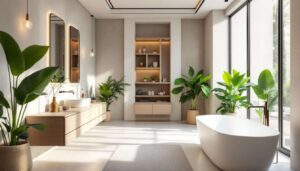
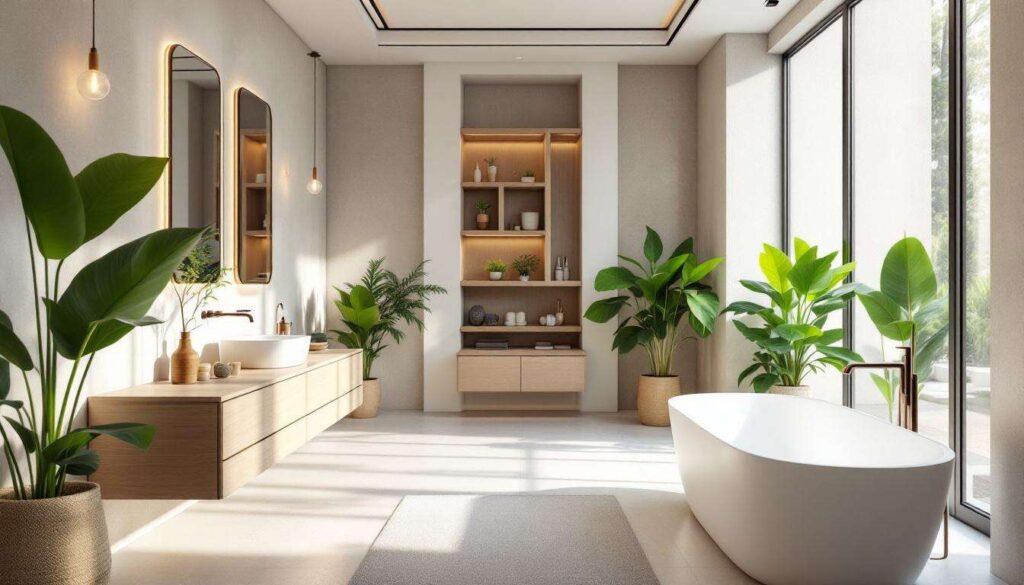
Bathroom design continues to evolve as designers push boundaries between practical functionality and aesthetic innovation. The latest insights from industry professionals reveal a fascinating shift towards spaces that prioritise both architectural integrity and personal expression. These emerging trends reflect a deeper understanding of how bathrooms can transform from purely utilitarian rooms into sanctuaries that enhance daily rituals whilst making bold design statements.
The trending colours for 2026
The rise of warm, earthy tones
Colour palettes for bathroom spaces are experiencing a dramatic shift towards warmth and natural inspiration. Designers are moving away from the stark whites and cool greys that dominated previous years, embracing instead a spectrum of earthy hues that create inviting, cocooning atmospheres. These shades include:
- Terracotta and burnt sienna tones that evoke Mediterranean warmth
- Soft sage greens reminiscent of natural foliage
- Warm beiges and creams that provide a neutral yet sophisticated backdrop
- Deep ochres and clay colours that add richness without overwhelming
Curated accent colours within midimalism
The midimalism philosophy allows for strategic colour deployment that balances restraint with personality. Rather than committing to single-tone schemes, designers recommend incorporating carefully selected accent colours that add vibrancy without creating visual chaos. This approach enables homeowners to express individuality whilst maintaining the clean lines that define contemporary design. Textured tiles in complementary shades or painted vanities in statement colours serve as focal points within otherwise neutral spaces.
These colour choices extend beyond mere aesthetics, as they influence the psychological experience of the space, creating environments that feel both energising and restorative. This nuanced approach to colour sets the foundation for understanding how traditional elements are being reimagined.
The revival of traditional elements
Drop-in and undermount bathtubs return
After years of freestanding tubs dominating bathroom design, drop-in and undermount bathtubs are experiencing a significant resurgence. These installations offer practical advantages that their freestanding counterparts cannot match. The surrounding ledges provide functional surfaces for bath products, candles, and decorative elements, creating a hotel-like luxury experience within domestic settings.
| Bathtub type | Key advantages | Design impact |
|---|---|---|
| Drop-in | Integrated storage ledges, easier installation | Seamless architectural integration |
| Undermount | Clean lines, sophisticated appearance | Minimalist elegance |
| Freestanding | Sculptural presence, flexibility | Statement piece requiring space |
Bespoke architectural features
Bathrooms are increasingly treated as architectural statements rather than afterthoughts. This manifests through custom-designed elements that showcase craftsmanship and individuality. Carved stone sinks with organic shapes, integrated vanities that appear to float, and bespoke cabinetry with soft curves exemplify this movement. These features prioritise grace and fluidity over rigid geometric forms, creating spaces that feel intentionally designed rather than merely functional.
The emphasis on traditional craftsmanship combined with contemporary sensibilities bridges past and present, establishing bathrooms as rooms worthy of the same design attention as living spaces. This architectural focus naturally leads to considerations about the materials that bring these visions to life.
Material innovations to watch
Untreated natural finishes
Authenticity drives material selection as designers embrace untreated natural finishes that celebrate inherent beauty. Stone surfaces left in their natural state, complete with variations and imperfections, provide tactile and visual richness that manufactured uniformity cannot replicate. These materials age gracefully, developing patinas that enhance rather than diminish their appeal.
- Raw limestone with visible fossils and natural veining
- Unpolished marble showcasing authentic texture
- Travertine with characteristic pitting and variation
- Slate in natural cleft finishes for organic appeal
Handmade textures and artisanal touches
The movement towards handcrafted materials reflects a broader cultural appreciation for artisanal production. Handmade tiles with irregular edges, textured plaster finishes applied by skilled craftspeople, and bespoke metalwork all contribute to spaces that feel uniquely personal. These elements introduce subtle imperfections that add warmth and humanity to bathroom environments, counteracting the clinical precision of mass-produced alternatives.
Material choices fundamentally shape how spaces are experienced, but they work in concert with lighting to create truly transformative environments.
Bathroom lighting trends
Integrated LED solutions
Lighting technology advances enable seamless integration of illumination into architectural elements. LED strips concealed within cabinetry, behind mirrors, and along architectural details provide both functional task lighting and atmospheric ambient illumination. This approach eliminates the need for obtrusive fixtures whilst ensuring adequate light for grooming activities.
Layered lighting strategies
Sophisticated bathroom lighting employs multiple sources at varying intensities to create adaptable environments. This layered approach includes:
- Overhead ambient lighting for general illumination
- Task lighting at mirrors for precision grooming
- Accent lighting highlighting architectural features
- Dimmable options allowing mood adjustment
The result is spaces that transition seamlessly from bright, energising morning routines to calming evening rituals. Thoughtful lighting design enhances both functionality and atmosphere, supporting the wellness-focused approach that defines contemporary bathroom design.
The importance of wellness in design
Bathrooms as personal sanctuaries
The conceptual shift towards viewing bathrooms as wellness spaces rather than purely functional rooms fundamentally alters design priorities. These environments now serve as retreats where occupants can decompress, practise self-care, and escape daily pressures. Design elements that support this function include comfortable seating, adequate surfaces for wellness products, and spatial layouts that encourage lingering rather than rushing.
Sensory considerations
Wellness-oriented design addresses multiple sensory dimensions to create holistic experiences. Textured materials provide tactile interest, natural finishes contribute visual warmth, and thoughtful acoustics reduce harsh echoes. Temperature control through heated floors and towel rails, alongside proper ventilation that maintains air quality, ensures physical comfort that supports mental wellbeing.
As wellness becomes central to bathroom design philosophy, technological innovations provide new tools for enhancing these spaces.
The impact of new technologies on design
Smart functionality integration
Technology infiltrates bathroom design through discreet smart features that enhance convenience without compromising aesthetics. Digital shower controls allowing precise temperature and flow adjustment, mirrors with integrated displays showing weather and schedules, and automated lighting responding to occupancy exemplify this integration. The key lies in implementing technology that serves genuine functional purposes rather than novelty.
Sustainable innovations
Environmental considerations drive technological adoption as designers specify water-efficient fixtures and energy-saving systems. Low-flow taps and showers that maintain performance whilst reducing consumption, dual-flush toilets, and greywater recycling systems reflect growing ecological awareness. These technologies align with broader sustainability goals whilst often reducing operational costs.
| Technology | Function | Design benefit |
|---|---|---|
| Digital shower controls | Precise temperature management | Sleek, minimalist interfaces |
| Smart mirrors | Information display, defogging | Integrated functionality |
| Low-flow fixtures | Water conservation | Identical aesthetic to standard fittings |
Bathroom design trends for the coming year demonstrate a sophisticated understanding of how these spaces function within contemporary life. The movement towards warmer colour palettes creates inviting atmospheres, whilst the revival of traditional bathtub styles and bespoke architectural features elevates bathrooms beyond mere utility. Natural materials celebrated for their authenticity, combined with integrated lighting solutions, establish environments that feel both timeless and current. The emphasis on wellness transforms bathrooms into personal sanctuaries, and thoughtful technology integration enhances functionality without compromising design integrity. These trends collectively point towards bathrooms that honour craftsmanship, prioritise occupant wellbeing, and reflect individual personality through carefully curated design choices.