
Interior design trends have always been subject to rapid shifts, with styles emerging and fading at an unprecedented pace. Designers across the industry have identified several movements that captivated homeowners briefly but are now firmly relegated to the past. These aesthetic choices, once celebrated for their boldness and innovation, have proven too polarising or impractical for lasting appeal. Understanding which trends have reached their expiration date helps homeowners make more informed decisions about their living spaces.
Ephemeral influence of maximalism
The overwhelming nature of excess
Maximalism burst onto the design scene as a rebellious counterpoint to years of restrained aesthetics. The philosophy encouraged layering patterns, textures, and colours without restraint, creating spaces that felt like curated collections of personal treasures. However, designers now report that clients are retreating from this approach, citing several practical concerns:
- Maintenance demands became exhausting with countless decorative objects requiring constant attention
- Visual clutter created anxiety rather than the intended sense of richness
- Photography-driven social media promoted extreme versions that proved unliveable
- The financial investment required to achieve authentic maximalism proved unsustainable
Why the trend collapsed
The fundamental problem with maximalism lay in its execution rather than its concept. What worked beautifully in carefully styled photographs often translated poorly to everyday living. Designers observed that homeowners struggled to maintain the delicate balance between curated abundance and chaotic excess. The trend also suffered from becoming a victim of its own success, with mass-market retailers flooding homes with cheap imitations that diluted the original vision. Professional designers agree that whilst personal collections and layered spaces have merit, the extreme interpretation of maximalism has run its course.
As homeowners reassess their relationship with their possessions and living spaces, they’re seeking approaches that offer visual interest without overwhelming the senses.
Return to the simplicity of minimalism
The pendulum swings back
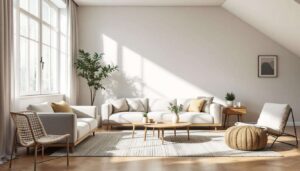
Following the maximalist experiment, designers report a decisive shift towards cleaner, more streamlined interiors. This isn’t simply a return to stark white rooms, but rather an evolved minimalism that embraces warmth whilst maintaining restraint. Clients are requesting spaces that feel calm, organised, and intentional, with every element serving a purpose.
| Minimalist principle | Contemporary application |
|---|---|
| Limited colour palette | Neutral bases with strategic accent colours |
| Functional furniture | Multi-purpose pieces with hidden storage |
| Clear surfaces | Designated display areas for select items |
| Natural materials | Wood, stone, and textile textures |
Sustainable simplicity
This renewed appreciation for minimalism aligns with broader concerns about sustainability and mindful consumption. Designers note that clients are investing in fewer, higher-quality pieces rather than accumulating trendy items. The focus has shifted to timeless design that won’t require replacement as fashions change, representing both financial wisdom and environmental responsibility.
Whilst minimalism provides the foundation, other specific aesthetic choices from recent years have also fallen from favour.
Halt for neons and gaudy colours
The brief neon revival
Neon accents and intensely saturated colours enjoyed a surprising resurgence, particularly in urban apartments and commercial spaces. Designers experimented with electric blues, shocking pinks, and luminous yellows, often incorporating actual neon signage as decorative elements. The trend promised energy and personality but ultimately proved too aggressive for sustained living environments.
Why bright colours failed to endure
Professional designers cite multiple reasons for abandoning this vibrant palette:
- Intense colours proved mentally exhausting in residential settings
- Neon elements dated quickly, looking tired within months
- Coordinating furnishings and accessories became problematic
- Resale concerns emerged as potential buyers rejected bold colour choices
- The trend felt juvenile rather than sophisticated upon reflection
The psychological impact of living with such stimulating colours became apparent as homeowners reported difficulty relaxing in spaces that felt more like nightclub interiors than homes. Designers now recommend incorporating colour through easily changeable elements like artwork or textiles rather than permanent fixtures.
Beyond colour choices, specific patterns have also exhausted their welcome in contemporary interiors.
The end of animal prints in interior decor
From statement to overstatement
Leopard spots, zebra stripes, and other animal prints infiltrated homes through upholstery, wallpaper, and accessories. What began as a sophisticated nod to fashion-forward design quickly became ubiquitous and lost its impact. Designers report that animal prints now read as dated rather than daring.
The saturation problem
The decline of animal prints illustrates how rapid adoption can kill a trend. When every high street retailer offered zebra-print cushions and leopard-spot throws, the exclusivity vanished. Additionally, designers note that animal prints rarely aged well, with the pattern itself becoming tiresome regardless of quality. The trend also faced criticism for perpetuating problematic associations with trophy hunting and exotic animal exploitation, making it aesthetically and ethically questionable.
Another aesthetic movement that promised innovation has similarly reached its conclusion.
Retro-futurism: the craze is over
The appeal of imagined futures
Retro-futurism drew inspiration from mid-century visions of what the future might hold, incorporating metallic finishes, geometric shapes, and space-age materials. The aesthetic offered a playful alternative to conventional design, blending nostalgia with forward-thinking optimism. However, designers now acknowledge that this trend proved too niche for mainstream adoption.
Why the future became past
The retro-futuristic movement struggled with several fundamental challenges. The aesthetic required significant commitment, with half-hearted attempts appearing confused rather than cohesive. Furthermore, the trend relied heavily on specific furniture pieces and accessories that were expensive and difficult to source. As the novelty wore off, homeowners found themselves with distinctive pieces that no longer fit their evolving tastes. Designers also note that retro-futurism worked better in commercial or hospitality settings than in private residences, where comfort and practicality ultimately take precedence over conceptual design statements.
The short-lived nature of these trends reveals important lessons about design longevity. Successful interiors balance personal expression with timeless principles, avoiding extremes that quickly feel dated. Designers emphasise investing in quality fundamentals whilst incorporating trend elements through easily updated accessories. The movements that failed shared common weaknesses: impracticality, visual aggression, or reliance on novelty rather than enduring appeal. As the industry moves forward, the focus returns to creating spaces that serve their inhabitants’ needs whilst reflecting considered aesthetic choices that transcend fleeting fashions.