



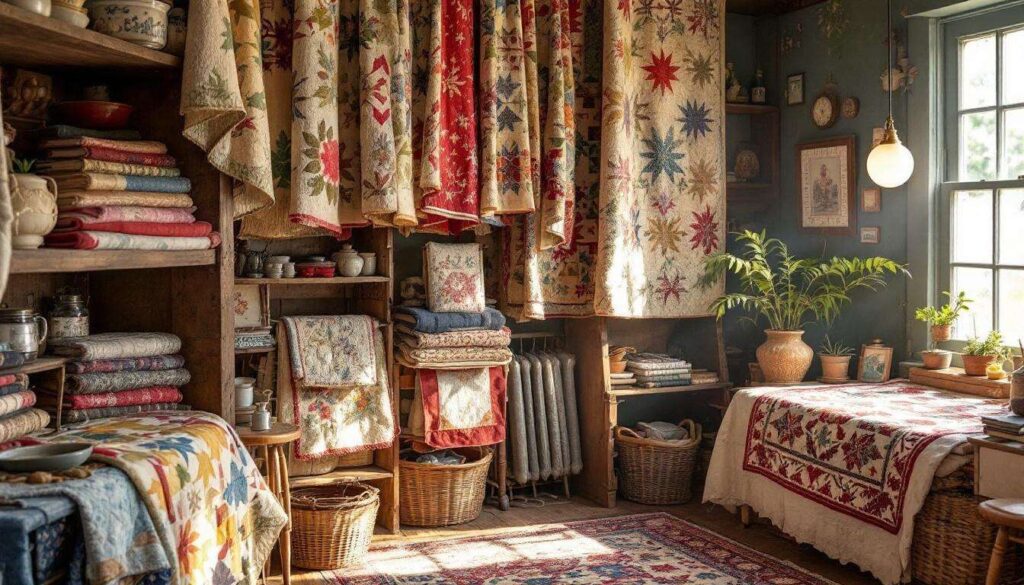
Vintage quilts represent far more than simple bed coverings; they embody centuries of craftsmanship, cultural heritage, and artistic expression. Antiques dealers consistently report strong demand for specific quilt styles that captivate collectors and interior designers alike. These textile treasures tell stories of their makers whilst offering distinctive aesthetic appeal that transcends contemporary trends. Understanding which vintage quilt styles command attention in the marketplace reveals fascinating insights into both historical significance and enduring beauty.
The fascinating history of vintage quilts
Origins and evolution of quilt-making traditions
Quilting emerged as both practical necessity and creative outlet across numerous cultures throughout history. Early American settlers developed distinctive quilting techniques that combined European traditions with New World innovations, creating functional bedcovers that provided warmth whilst showcasing artistic talent. Women gathered for quilting bees, transforming solitary work into social occasions that strengthened community bonds.
The craft evolved significantly through different historical periods:
- Colonial era quilts featured simple geometric patterns dictated by fabric scarcity
- Victorian-era designs embraced elaborate embellishments and luxurious materials
- Depression-era quilts demonstrated resourcefulness through feed sack fabrics
- Mid-century quilts reflected modernist influences with bold colours and simplified forms
Cultural significance and preservation
Vintage quilts serve as tangible connections to ancestral heritage, documenting social history through fabric choices, patterns, and construction methods. Museums and private collectors increasingly recognise these textiles as important historical artefacts worthy of preservation. The stories embedded within vintage quilts illuminate daily life, economic conditions, and artistic sensibilities of bygone eras, making them invaluable resources for historians and enthusiasts.
This rich historical context provides the foundation for understanding why certain quilt styles consistently attract collectors and command premium prices in the antiques market.
Patchwork patterns: a timeless tradition
Classic patchwork designs that endure
Traditional patchwork quilts remain perennially popular amongst collectors due to their geometric precision and endless pattern variations. Antiques dealers report consistent demand for well-executed examples featuring recognisable patterns such as Log Cabin, Nine Patch, and Double Wedding Ring. These designs demonstrate mathematical precision whilst allowing individual creativity through fabric selection and colour placement.
| Pattern Name | Complexity Level | Typical Era | Collector Appeal |
|---|---|---|---|
| Log Cabin | Moderate | 1860s-1900s | Very High |
| Nine Patch | Simple | 1800s-present | High |
| Double Wedding Ring | Complex | 1920s-1940s | Extremely High |
Factors affecting patchwork quilt value
The desirability of patchwork quilts depends on several critical factors that dealers evaluate carefully. Condition remains paramount, with intact examples commanding significantly higher prices than damaged pieces. Fabric quality, colour vibrancy, and pattern complexity all influence market value. Provenance documentation enhances desirability, particularly when quilts connect to notable families or historical events.
Beyond patchwork’s geometric appeal, collectors increasingly seek quilts that represent more elaborate artistic achievements.
The Baltimore Album style: a collector’s art
Distinctive characteristics of Baltimore Album quilts
Baltimore Album quilts represent the pinnacle of mid-19th century quilt artistry, originating in Baltimore, Maryland during the 1840s and 1850s. These extraordinary textiles feature elaborate appliqué blocks depicting floral arrangements, patriotic symbols, buildings, and commemorative inscriptions. Each block functions as an individual composition, collectively creating a visual album of remarkable sophistication.
Key identifying features include:
- Intricate appliqué work with stuffed or padded elements
- Vibrant Turkey red and chrome yellow fabrics characteristic of the period
- Detailed embroidery and ink inscriptions
- Symbolic imagery including eagles, lyres, and cornucopias
- Professional-quality execution suggesting skilled makers
Market value and rarity
Authentic Baltimore Album quilts rank amongst the most valuable vintage quilts available in the antiques market. Dealers report that exceptional examples regularly achieve five-figure prices at auction, with museum-quality pieces commanding even higher sums. The rarity of genuine Baltimore Album quilts combined with their extraordinary craftsmanship creates intense competition amongst serious collectors.
Whilst Baltimore Album quilts represent elaborate artistry, another sought-after style achieves beauty through restraint and simplicity.
Amish quilts: simplicity and elegance
The aesthetic philosophy of Amish quilt-making
Amish quilts embody distinctive minimalist aesthetics that resonate powerfully with contemporary collectors. Created by Amish communities primarily in Pennsylvania, Ohio, and Indiana, these quilts feature bold geometric designs in saturated solid colours against contrasting backgrounds. The deliberate simplicity reflects religious values emphasising humility and functionality whilst paradoxically creating visually striking compositions.
Typical Amish quilt characteristics include:
- Large-scale geometric patterns such as Diamond in Square and Bars
- Rich jewel-tone colours including deep purples, blues, and burgundies
- Exceptional hand-quilting with elaborate feather and cable motifs
- Wool or cotton fabrics in solid colours without prints
- Wide borders framing central designs
Why collectors prize Amish quilts
The appeal of Amish quilts extends beyond their visual impact to encompass cultural authenticity. Antiques dealers note that collectors appreciate the meditative quality of meticulous hand-quilting and the bold colour combinations that appear remarkably modern despite historical origins. Early Amish quilts from the late 19th and early 20th centuries command premium prices, particularly examples demonstrating exceptional quilting density and colour harmony.
Contrasting sharply with Amish restraint, another highly sought style embraces exuberant ornamentation and eclectic composition.
Crazy quilts: artistic chaos or masterpiece ?
Understanding the Crazy quilt phenomenon
Crazy quilts emerged during the Victorian era as expressions of affluence and artistic ambition, diverging dramatically from traditional quilt construction. Rather than following geometric patterns, makers assembled irregular fabric pieces in seemingly random arrangements, embellishing seams with elaborate embroidery stitches. Luxurious materials including silk, velvet, and brocade replaced utilitarian cottons, transforming quilts into decorative showpieces.
Decorative elements and techniques
The defining characteristic of Crazy quilts lies in their profusion of ornamental details that demonstrate needlework virtuosity. Makers incorporated diverse embellishments:
- Painted or embroidered motifs depicting flowers, animals, and landscapes
- Ribbonwork, lace, and beadwork additions
- Commemorative elements such as dates, initials, and symbolic imagery
- Fancy embroidery stitches including feather, herringbone, and chain stitches
- Appliquéd fabric scraps from significant garments or occasions
Collector perspectives on Crazy quilts
Antiques dealers report that Crazy quilts generate polarised responses amongst collectors, with enthusiasts either adoring or dismissing their ornate aesthetic. Those who appreciate Crazy quilts value them as textile art reflecting Victorian sensibilities and showcasing exceptional needlework skills. Condition significantly affects value since delicate materials and embellishments prove vulnerable to deterioration. Well-preserved examples with documented provenance attract serious collector interest.
Another category of vintage quilts derives desirability from historical associations rather than stylistic characteristics alone.
The craze for Civil War period quilts
Historical context and significance
Quilts produced during the American Civil War era carry profound historical resonance that enhances their appeal to collectors. These textiles emerged during a tumultuous period when fabric shortages necessitated creative resourcefulness whilst women sought meaningful contributions to the war effort. Civil War era quilts often incorporated patriotic themes and served fundraising purposes for soldiers’ aid societies.
Identifying authentic Civil War period quilts
Determining genuine Civil War era provenance requires careful examination of multiple factors that dealers use to authenticate pieces:
| Authentication Factor | Key Indicators |
|---|---|
| Fabric Types | Period-appropriate cottons, homespun materials, indigo blues |
| Dyes and Colours | Natural dyes, characteristic fading patterns, Turkey red |
| Construction Methods | Hand-piecing, hand-quilting, period-appropriate batting |
| Pattern Styles | Popular 1860s designs, patriotic motifs, album blocks |
Market demand and investment potential
Civil War period quilts represent compelling investments for historically minded collectors, particularly examples with documented connections to specific individuals or events. Antiques dealers emphasise that provenance documentation substantially increases value, transforming ordinary quilts into significant historical artefacts. The combination of historical importance, relative scarcity, and emotional resonance ensures continued strong demand within the vintage quilt market.
The enduring appeal of vintage quilts reflects appreciation for craftsmanship, historical significance, and aesthetic beauty. Collectors seeking patchwork patterns value geometric precision and traditional designs, whilst Baltimore Album enthusiasts prize elaborate appliqué artistry. Amish quilts attract admirers of minimalist elegance, and Crazy quilts appeal to those favouring Victorian exuberance. Civil War era pieces offer historical connections that transcend stylistic considerations. Understanding these five sought-after categories enables collectors to make informed acquisitions whilst appreciating the remarkable textile heritage these quilts represent.