
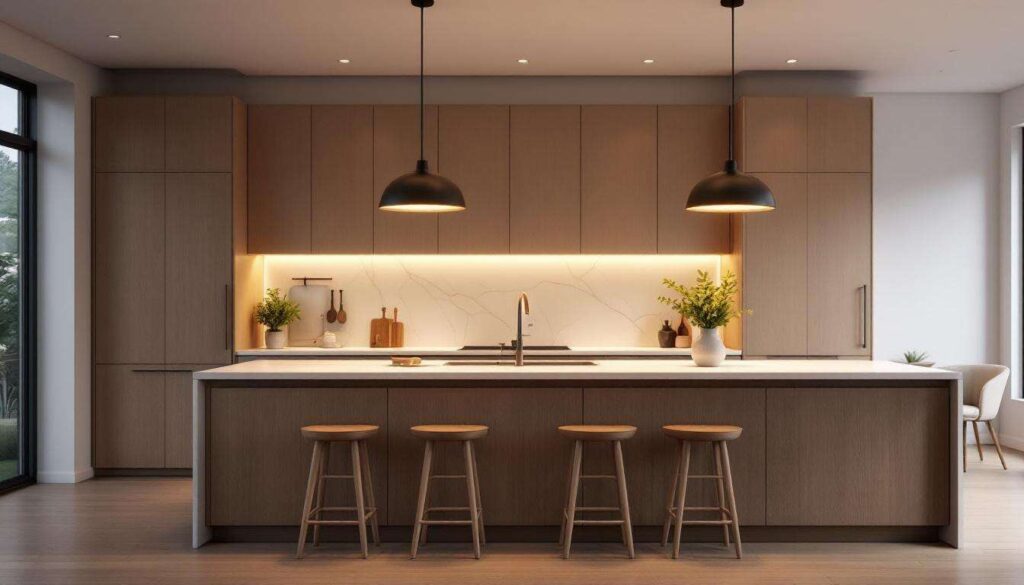
The kitchen has evolved from a purely functional space into the heart of the home, where design and practicality must coexist harmoniously. Lighting plays a pivotal role in this transformation, influencing not only visibility but also the overall atmosphere and aesthetic appeal of the space. As homeowners increasingly seek to create environments that reflect their personal style whilst meeting practical needs, the lighting industry responds with innovative solutions that blend technology, artistry, and sustainability. The following trends showcase how strategic illumination choices can elevate a kitchen from ordinary to extraordinary, addressing both the functional requirements of food preparation and the desire for visually striking interiors.
Trends in Pendant Lighting for 2026
Pendant lighting continues to dominate kitchen design, offering a versatile solution that combines task illumination with decorative impact. The latest iterations move beyond simple functional fixtures, embracing bold forms and unexpected materials that serve as focal points within the space.
Oversized Statement Pieces
Large-scale pendant lights are gaining traction, particularly over kitchen islands and dining areas. These dramatic fixtures create visual interest whilst providing ample illumination for food preparation and social gatherings. Designers favour pieces that balance substantial presence with refined detailing, ensuring they enhance rather than overwhelm the space.
Clustered Arrangements
Rather than relying on a single pendant, many homeowners are opting for clustered configurations that offer:
- Enhanced visual depth and dimension
- Customisable light distribution across work surfaces
- Opportunities to mix complementary designs for a curated appearance
- Flexibility in adjusting individual heights for optimal functionality
Linear Suspension Systems
Linear pendants provide continuous illumination along extended islands and countertops, addressing the practical needs of modern kitchen layouts whilst maintaining a sleek, contemporary aesthetic. These fixtures often incorporate adjustable elements, allowing users to direct light precisely where needed.
Whilst pendant lighting addresses overhead illumination needs effectively, complementary lighting solutions are equally important for creating a comprehensive lighting scheme.
Wall Lighting: a Popular Solution
Wall-mounted fixtures have emerged as a particularly sought-after element in kitchen design, offering both functional and decorative benefits that enhance the overall ambience.
Sconces for Open Shelving
As kitchens increasingly feature open shelving displaying decorative items, wall sconces provide targeted illumination that accentuates these displays. The harmony between lighting and interior decoration becomes paramount, with fixtures selected to complement both the items showcased and the broader design scheme.
Task-Oriented Wall Fixtures
Wall-mounted lights positioned strategically near preparation areas offer focused illumination without occupying valuable counter space. These fixtures prove especially valuable in kitchens where ceiling-mounted options may create shadows or prove impractical due to architectural constraints.
Architectural Integration
Modern wall lighting solutions integrate seamlessly with cabinetry and architectural features, creating a cohesive appearance that enhances the kitchen’s design integrity. Options include:
- Recessed wall fixtures that maintain clean lines
- Articulating arms that provide adjustable illumination
- Decorative sconces that serve as design accents
- Picture lights adapted for highlighting specific zones
The increasing sophistication of wall lighting solutions parallels broader technological advances transforming how we control and customise kitchen illumination.
The Rise of Smart Lighting Systems
Technological innovation has revolutionised kitchen lighting, with smart systems offering unprecedented control over ambience, efficiency, and functionality.
Personalisation and Control
Smart lighting systems enable users to transition effortlessly from chef mode to convivial dinner settings with simple voice commands or mobile applications. This flexibility allows homeowners to:
- Adjust brightness levels for different activities
- Create customised scenes for various occasions
- Schedule lighting changes throughout the day
- Control multiple zones independently
Tunable Lighting Technology
Tunable lighting systems represent a significant advancement, allowing users to adjust colour temperature to suit specific needs. These systems enhance food preparation accuracy by providing optimal visibility whilst also supporting circadian rhythms through temperature adjustments aligned with natural light patterns.
Human-Centric Lighting Applications
Human-centric lighting adjusts colour temperature throughout the day, shifting from cooler lights in the morning (4000–5000K) to warmer tones in the evening (2700–3000K). This approach promotes user well-being whilst enhancing the natural colours of food and finishes, creating a more comfortable and health-conscious environment.
| Time of Day | Colour Temperature | Primary Benefit |
|---|---|---|
| Morning | 4000–5000K | Alertness and energy |
| Afternoon | 3500–4000K | Sustained focus |
| Evening | 2700–3000K | Relaxation and comfort |
Beyond technological sophistication, material choices play an equally important role in defining contemporary kitchen lighting aesthetics.
Organic Materials and Natural Textures
The incorporation of organic materials and natural textures reflects a broader design movement emphasising sustainability, tactile appeal, and connection to the natural world.
Wood and Woven Elements
Wooden fixtures and woven materials introduce warmth and texture, softening the often hard surfaces prevalent in kitchen environments. These materials create visual interest whilst maintaining a sense of understated elegance that complements various design styles from rustic to contemporary.
Stone and Ceramic Accents
Natural stone and ceramic elements bring an artisanal quality to lighting fixtures, offering unique variations that ensure no two pieces are identical. These materials provide:
- Durability suitable for kitchen environments
- Heat resistance for fixtures requiring close proximity to light sources
- Distinctive aesthetic character
- Sustainable credentials when sourced responsibly
Rattan and Bamboo Applications
Rattan and bamboo fixtures introduce organic patterns that cast intriguing shadows, adding another dimension to the lighting experience. These materials align with sustainability priorities whilst offering versatility in form and style.
Whilst natural materials provide warmth and texture, metallic finishes offer a contrasting approach that shapes ambience through reflective properties and contemporary appeal.
The Impact of Metallic Finishes on Ambiance
Metallic finishes significantly influence the atmosphere within kitchen spaces, with different metals creating distinct visual and emotional effects.
Warm Metals: Brass and Copper
Brass and copper fixtures introduce warmth and richness, creating inviting environments that feel both sophisticated and comfortable. These metals develop patinas over time, adding character and depth that enhance their appeal. Their reflective qualities amplify light distribution whilst contributing to a luxurious aesthetic.
Cool Metals: Chrome and Stainless Steel
Chrome and stainless steel offer sleek, contemporary appearances that complement modern kitchen designs. These finishes provide:
- Easy maintenance and cleaning
- Resistance to corrosion in humid environments
- Crisp, clean aesthetic appeal
- Compatibility with stainless steel appliances
Mixed Metal Approaches
Combining different metallic finishes creates visual interest and allows for greater design flexibility. This approach enables homeowners to incorporate multiple design influences whilst maintaining cohesion through thoughtful coordination of tones and textures.
Matte versus Polished Surfaces
The choice between matte and polished metallic finishes affects both visual impact and practical considerations. Matte finishes offer subtlety and minimise fingerprints, whilst polished surfaces maximise reflectivity and create more dramatic effects.
Beyond material choices and finishes, the sculptural qualities of lighting fixtures themselves have become increasingly important in defining kitchen character.
Sculptural Lighting Fixtures: a New Style Statement
Lighting fixtures have transcended their utilitarian origins to become artistic statements that define and elevate kitchen aesthetics.
Architectural Forms
Fixtures inspired by architectural principles incorporate geometric shapes and structural elements that command attention whilst maintaining functional integrity. These pieces blur the boundaries between lighting and sculpture, serving as conversation starters that reflect the homeowner’s design sensibility.
Organic Silhouettes
Nature-inspired forms bring fluidity and movement to kitchen spaces, contrasting with the typically angular elements found in cabinetry and appliances. These sculptural pieces soften the overall aesthetic whilst providing visual focal points that draw the eye upward.
Minimalist Statements
Paradoxically, minimalist fixtures can make powerful statements through their restraint and precision. Clean lines and refined proportions demonstrate that impact need not rely on complexity, offering sophisticated solutions for contemporary kitchens.
Artistic Collaborations
Collaborations between lighting manufacturers and artists have produced fixtures that function as genuine art pieces. These limited-edition and bespoke options allow homeowners to incorporate unique elements that distinguish their kitchens from standard installations.
The evolution of kitchen lighting reflects broader shifts in how we conceive of and utilise domestic spaces. By embracing pendant innovations, wall-mounted solutions, smart technologies, organic materials, metallic finishes, and sculptural forms, homeowners can create kitchens that serve as both functional workspaces and beautiful environments for gathering and entertaining. The layered approach combining ambient, task, and accent lighting ensures flexibility, whilst human-centric systems promote well-being. As the kitchen continues to occupy a central position in modern homes, thoughtful lighting choices transform these spaces into reflections of personal style and contemporary living priorities.