
Interior designers have long warned against certain decorative choices that can instantly cheapen the appearance of a living room. These accessories, often purchased with the best intentions, can transform an otherwise elegant space into a showcase of questionable taste. From synthetic materials to excessive ornamentation, understanding which items to avoid is essential for creating a sophisticated and timeless interior. Professional decorators consistently identify specific accessories that undermine the aesthetic quality of living spaces, and their advice proves invaluable for homeowners seeking to elevate their décor.
Faux leather sofas: why avoid them ?
The visual and tactile shortcomings
Faux leather sofas represent one of the most common mistakes in living room furnishing. Whilst manufacturers have improved synthetic materials over the years, these pieces still fail to replicate the authentic appearance and feel of genuine leather. The plastic-like sheen immediately signals a budget choice, and the material often develops unsightly cracks and peeling within a few years of use.
Designers emphasise several key problems with faux leather upholstery:
- The surface lacks the natural patina that develops on real leather
- Temperature regulation proves poor, making the sofa uncomfortable in various seasons
- The material cannot breathe, leading to perspiration and discomfort
- Durability issues result in premature deterioration
Better alternatives for your budget
Rather than investing in faux leather, interior designers recommend quality fabric options that offer superior longevity and aesthetic appeal. Linen, cotton blends, and performance fabrics provide excellent alternatives at comparable price points. These materials age gracefully and can be cleaned or reupholstered, making them more sustainable choices for conscientious homeowners.
Understanding material quality helps homeowners make informed decisions about other textile elements in their living spaces, particularly when selecting window treatments.
Heavy and colourful curtains: a mistake to avoid
The dated appearance of excessive drapery
Thick, heavily patterned curtains in bold colours create an overwhelming visual burden that designers consistently discourage. These window treatments, reminiscent of previous decades, make rooms feel smaller and darker whilst drawing attention away from architectural features. The excessive fabric weight can also damage curtain rods and create maintenance challenges.
| Curtain style | Visual impact | Design recommendation |
|---|---|---|
| Heavy velvet with patterns | Oppressive, dated | Avoid entirely |
| Bright floral prints | Chaotic, distracting | Use sparingly in small doses |
| Light linen or sheer fabrics | Airy, sophisticated | Highly recommended |
Modern window treatment solutions
Contemporary design favours simple, light-filtering fabrics in neutral tones that complement rather than dominate a space. Designers suggest selecting curtains that enhance natural light whilst providing necessary privacy. Sheer materials, subtle textures, and minimalist hanging systems create an elegant backdrop that allows other design elements to shine.
Just as window treatments can overwhelm a space, excessive soft furnishings present similar challenges for maintaining visual balance.
Excessive cushions: the trap of clutter
When comfort becomes chaos
The trend of piling numerous decorative cushions onto sofas and chairs has reached excessive proportions in many homes. Designers warn that more than four to six cushions on a standard sofa creates visual clutter and practical inconvenience. Homeowners often find themselves removing cushions before sitting, only to face the question of where to place them.
The cushion overload syndrome manifests in several problematic ways:
- Seating becomes impractical and uninviting
- The sofa’s design and lines become obscured
- Cleaning and maintenance grow increasingly burdensome
- The space appears chaotic rather than curated
The art of cushion curation
Professional decorators recommend selecting two to four high-quality cushions in complementary colours and textures. This restrained approach allows each piece to make a statement whilst maintaining functionality. Mixing one or two patterns with solid colours creates visual interest without overwhelming the eye, and varying sizes adds dimension without excess.
The principle of restraint that applies to cushions extends equally to furniture selection and arrangement throughout the living room.
Overloaded furniture: how to lighten your space
The problems with furniture excess
Cramming too many pieces into a living room represents a fundamental design error that compromises both aesthetics and functionality. Designers observe that homeowners often attempt to maximise seating or storage without considering spatial flow and visual breathing room. The result feels claustrophobic and prevents the room from achieving its potential.
Excessive furniture creates multiple issues:
- Movement through the space becomes difficult and awkward
- Individual pieces lose their visual impact
- The room appears smaller than its actual dimensions
- Cleaning and maintenance become unnecessarily complicated
Strategic furniture placement principles
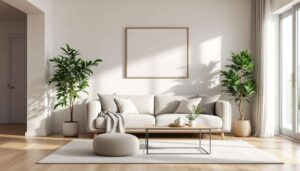
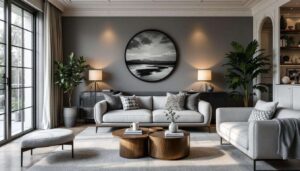
Interior designers advocate for thoughtful curation over quantity. Each furniture piece should serve a clear purpose and contribute to the overall design narrative. Maintaining adequate spacing between items allows for comfortable circulation whilst showcasing each piece’s design qualities. Consider multi-functional furniture that serves multiple purposes without occupying excessive floor space.
Whilst furniture choices impact the room’s foundation, decorative accessories like mirrors can either enhance or detract from the overall aesthetic.
Golden mirrors: the art of bad taste
Why ornate gold frames fail modern interiors
Heavily gilded mirrors with elaborate baroque-style frames rank among the most frequently cited design mistakes by professionals. These accessories, often purchased to create a sense of luxury, instead project an impression of dated ostentation. The excessive ornamentation overwhelms rather than enhances, and the gold finish rarely coordinates with contemporary colour schemes.
| Mirror style | Design era | Current relevance |
|---|---|---|
| Ornate gold baroque | Traditional | Generally outdated |
| Simple brass frame | Transitional | Moderately acceptable |
| Minimalist or frameless | Contemporary | Highly recommended |
Contemporary mirror alternatives
Designers recommend simple frames in brushed metals, natural wood, or frameless options that complement modern interiors. These choices reflect light effectively whilst maintaining visual subtlety. The mirror itself becomes a functional element that enhances space and brightness without demanding attention through excessive decoration.
Similar to mirrors, wall treatments require careful consideration to avoid creating dated or overwhelming visual effects.
Outdated wallpapers: the end of the rustic effect
The decline of rustic and busy patterns
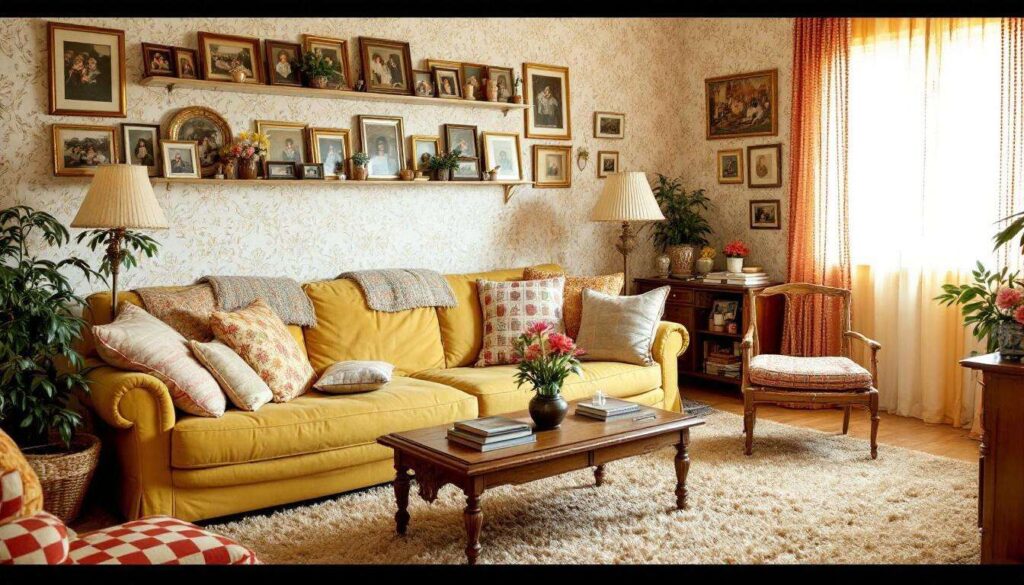
Wallpapers featuring heavy rustic motifs, busy florals, or dated geometric patterns instantly age a living room. Designers note that these coverings, particularly those mimicking wood panelling or stone textures, create an artificial appearance that undermines authenticity. The visual noise generated by complex patterns makes rooms feel smaller and more chaotic.
Problematic wallpaper characteristics include:
- Faux textures attempting to replicate natural materials
- Overly complex patterns that compete with furnishings
- Colour schemes that limit decorating flexibility
- Designs that quickly fall out of fashion
Modern wall treatment approaches
Contemporary design favours subtle textures, solid colours, or refined patterns that provide visual interest without domination. Designers suggest selecting wallpapers with simple geometrics, organic textures, or using accent walls sparingly. Quality paint in sophisticated colours often proves more versatile and timeless than patterned wallcoverings, allowing homeowners to update their spaces more easily as tastes evolve.
Creating a sophisticated living room requires discernment in accessory selection and a commitment to quality over quantity. The accessories designers warn against share common characteristics: they prioritise immediate visual impact over lasting appeal, sacrifice quality for affordability, and often reflect passing trends rather than timeless design principles. By avoiding faux materials, excessive ornamentation, and dated patterns, homeowners can cultivate spaces that feel both current and enduring. The most successful interiors embrace restraint, authenticity, and thoughtful curation, proving that less truly can be more when each element is carefully considered.