
Bathroom design continues to evolve, with homeowners seeking spaces that combine functionality, aesthetics, and wellbeing. Interior designers have identified seven straightforward upgrades that require minimal disruption yet deliver maximum impact. These transformations reflect a shift towards mindful living, technological convenience, and personalised sanctuaries that cater to modern lifestyles whilst respecting environmental considerations.
Sustainable and eco-friendly materials
Reclaimed and recycled surfaces
Reclaimed wood has emerged as a popular choice for bathroom vanities and shelving, bringing warmth and character whilst reducing environmental impact. Designers recommend sourcing materials from certified suppliers who verify the provenance of timber, ensuring responsible forestry practices. Recycled glass tiles offer another compelling option, transforming discarded bottles into stunning mosaic patterns that catch light beautifully. These surfaces work particularly well as shower surrounds or feature walls, creating visual interest without compromising sustainability credentials.
Low-impact fixtures and fittings
Water conservation remains a priority, with low-flow taps and showerheads becoming standard recommendations. Modern designs maintain excellent water pressure whilst reducing consumption by up to forty per cent. Consider these eco-friendly fixture options:
- Dual-flush toilets that offer variable water volumes
- Aerated taps that mix air with water for efficient flow
- Thermostatic shower valves that eliminate water waste during temperature adjustment
- Recycled brass and copper fittings with antimicrobial properties
Natural stone and sustainable ceramics
Locally sourced stone reduces transportation emissions whilst supporting regional economies. Materials such as slate, limestone, and travertine offer durability and timeless appeal. Sustainable ceramic manufacturers now produce tiles using renewable energy and recycled materials, with certifications clearly displayed to help consumers make informed choices. These materials naturally regulate humidity and temperature, contributing to a healthier bathroom environment.
The focus on sustainability naturally extends to how we integrate modern conveniences into our bathrooms, particularly through innovative technological solutions.
Integrated and connected technologies
Smart mirrors and digital displays
Intelligent mirrors represent one of the most transformative upgrades, incorporating LED lighting, defogging systems, and integrated displays. These multifunctional surfaces can show weather forecasts, news updates, or calendar appointments whilst you prepare for the day. Voice-activated controls allow hands-free operation, particularly useful when applying cosmetics or styling hair. Premium models include adjustable colour temperature lighting that mimics natural daylight, ensuring accurate makeup application.
Automated climate control
Maintaining optimal bathroom conditions becomes effortless with connected ventilation systems that monitor humidity levels and adjust automatically. These devices prevent mould growth and condensation damage whilst operating silently in the background. Underfloor heating with programmable thermostats ensures comfort precisely when needed, reducing energy consumption during unoccupied periods.
| Technology | Energy Saving | Installation Complexity |
|---|---|---|
| Smart shower systems | 25-30% | Moderate |
| Motion-sensor lighting | 40-50% | Low |
| Programmable radiators | 20-25% | Low |
Touchless and hygienic solutions
Contactless taps and soap dispensers enhance hygiene whilst adding contemporary sophistication. These fixtures use infrared sensors to detect hand presence, dispensing water or soap automatically. Self-cleaning toilet technologies employ UV light or electrolysed water to maintain sanitation between manual cleanings, reducing chemical usage and maintenance time.
Whilst technology enhances convenience, maximising available space through intelligent design remains equally important for creating functional bathrooms.
Clever storage solutions for small spaces
Vertical and wall-mounted options
Floating vanities create the illusion of spaciousness whilst providing practical storage beneath. These wall-mounted units facilitate easier floor cleaning and can incorporate soft-close drawers with internal organisers for toiletries. Tall cabinet units that extend towards the ceiling maximise vertical space, offering ample storage without encroaching on floor area. Designers suggest installing recessed shelving within wall cavities, particularly in shower areas, to hold essentials without protruding into the room.
Multifunctional furniture pieces
Ladder shelving units combine open and closed storage, leaning against walls to provide display space for decorative items alongside concealed storage for less attractive necessities. Mirrored cabinets with internal lighting serve triple purposes: reflection, illumination, and storage. Consider these space-saving furniture solutions:
- Ottoman storage benches that provide seating and concealment
- Over-toilet shelving units that utilise otherwise wasted space
- Corner carousel systems for awkward angular spaces
- Pull-out hampers integrated within vanity units
Hidden and integrated compartments
Toe-kick drawers installed beneath vanity units capture previously unused space, perfect for storing flat items such as scales or bath mats. Behind-mirror storage offers concealment for medications and personal care items whilst maintaining a streamlined appearance. Designers increasingly specify custom joinery that incorporates charging stations for electric toothbrushes and razors within drawers, eliminating countertop clutter.
Effective storage solutions work harmoniously with design aesthetics, particularly when creating bathrooms that embrace natural elements and organic influences.
Natural and organic atmospheres
Biophilic design elements
Living plant installations transform bathrooms into tranquil retreats, with species such as ferns, orchids, and peace lilies thriving in humid environments. Vertical gardens or living walls make dramatic statements whilst improving air quality through natural filtration. Designers recommend incorporating natural textures through materials such as bamboo accessories, woven baskets, and linen textiles that reinforce connections to nature.
Organic shapes and flowing lines
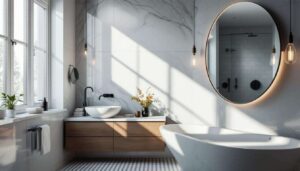
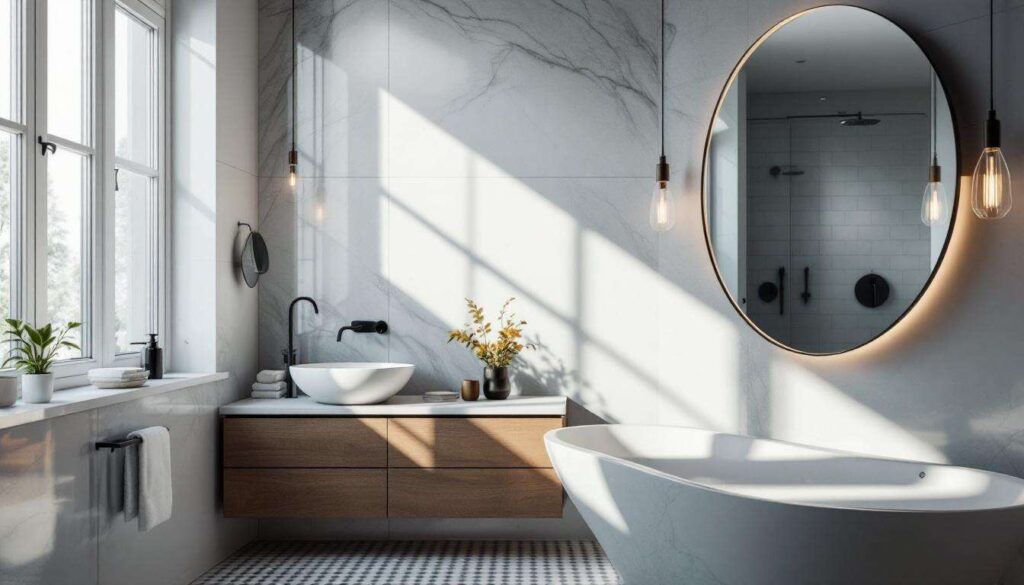
Curved vanities and rounded mirrors soften bathroom aesthetics, moving away from harsh geometric forms towards gentler profiles inspired by natural landscapes. Freestanding baths with organic silhouettes become sculptural focal points, their flowing lines reminiscent of river stones smoothed by water. Tap designs increasingly feature softer curves and brushed finishes that evoke natural materials rather than industrial chrome.
Natural ventilation and daylight
Skylights and larger windows flood bathrooms with natural light, reducing reliance on artificial illumination whilst providing essential ventilation. Frosted or textured glass maintains privacy without sacrificing luminosity. Where structural modifications prove impractical, designers suggest installing sun tunnels that channel daylight from roof spaces into windowless bathrooms through reflective tubes.
Creating these natural atmospheres depends significantly on selecting appropriate colour palettes that enhance the sense of calm and connection to the outdoors.
Soothing and trendy colours
Earthy and neutral foundations
Warm terracotta tones have gained popularity, bringing Mediterranean warmth to British bathrooms. These shades pair beautifully with natural materials, creating cohesive schemes that feel grounded and inviting. Sage green and soft clay colours provide sophisticated alternatives to stark white, offering depth whilst maintaining brightness. Designers recommend using these hues on feature walls or through large-format tiles, allowing them to make statements without overwhelming smaller spaces.
Accent colours and contrasts
Deep charcoal and matte black fixtures create striking contrasts against lighter backgrounds, adding contemporary edge to traditional colour schemes. Brass and copper accents introduce warmth through hardware, taps, and lighting fixtures. Consider these trending colour combinations:
- Soft grey with warm oak and brass details
- Creamy white with terracotta and natural stone
- Pale blue with white marble and chrome accents
- Sage green with black fixtures and gold hardware
Textural variation within monochromatic schemes
Tonal layering creates visual interest without introducing multiple colours, using varying shades of single hues across different surfaces. Textured tiles in neutral palettes add dimension through three-dimensional patterns, relief work, or varied finishes from glossy to matte. This approach maintains cohesion whilst preventing monotony, particularly effective in compact bathrooms where bold colour contrasts might feel overwhelming.
These carefully considered colour choices require appropriate illumination to showcase their full potential and create the desired ambience throughout different times of day.
Optimised and stylish lighting
Layered lighting schemes
Task lighting around mirrors ensures adequate illumination for grooming activities, with designers recommending vertical fixtures on either side of mirrors rather than single overhead sources that create shadows. Ambient lighting provides overall illumination, often through recessed ceiling fixtures or cove lighting that washes walls with gentle light. Accent lighting highlights architectural features or decorative elements, adding drama and visual interest to bathroom designs.
Adjustable and dimmable options
Dimmer switches allow occupants to adjust lighting intensity according to time of day and activity, creating bright environments for morning routines and softer atmospheres for evening relaxation. Colour temperature control enables switching between cool white light for energising mornings and warm tones for unwinding evenings. Smart lighting systems can programme these transitions automatically, responding to circadian rhythms.
Statement fixtures and decorative elements
Pendant lights suspended over freestanding baths create focal points whilst providing functional illumination. Chandelier-style fixtures bring unexpected glamour to bathrooms, particularly effective in rooms with high ceilings. Designers increasingly specify waterproof LED strip lighting beneath floating vanities or along bath surrounds, creating subtle glow effects that enhance ambience without overwhelming spaces.
| Lighting Type | Best Location | Recommended Wattage |
|---|---|---|
| Task lighting | Mirror sides | 40-60W equivalent |
| Ambient lighting | Ceiling centre | 60-100W equivalent |
| Accent lighting | Niches, shelves | 15-25W equivalent |
These seven upgrades demonstrate that transforming bathrooms need not involve extensive renovations or substantial budgets. Sustainable materials reduce environmental impact whilst creating healthier spaces. Connected technologies enhance convenience and efficiency. Clever storage maximises functionality regardless of room size. Natural elements and organic design principles foster wellbeing. Thoughtful colour selections establish desired moods. Optimised lighting schemes ensure spaces function beautifully throughout the day. By implementing even a selection of these designer-approved improvements, homeowners can create bathrooms that reflect contemporary values whilst remaining timeless in their appeal.