
Transforming an ordinary space into one that exudes luxury and sophistication doesn’t necessarily require an unlimited budget. Professional designers rely on a carefully curated selection of techniques that elevate interiors beyond their price tags. These methods focus on strategic choices rather than expensive purchases, proving that thoughtful design can create an impression of opulence without breaking the bank. From manipulating light to selecting the perfect finishing touches, these six designer-approved tricks demonstrate how attention to detail and intentional styling can make any room appear far more expensive than it actually is.
Agencing natural light
Maximising window treatments
Designers understand that natural light is the most valuable asset in any room. The way light enters and moves through a space dramatically affects its perceived value. Installing curtain rods significantly higher than the window frame and extending them beyond the window’s width creates an illusion of grander proportions. This simple adjustment makes ceilings appear taller and windows more substantial, instantly elevating the room’s aesthetic.
Strategic mirror placement
Mirrors serve a dual purpose in expensive-looking interiors. They amplify natural light whilst simultaneously expanding visual space. Positioning mirrors opposite or adjacent to windows allows them to capture and reflect daylight throughout the room. Consider these placement strategies:
- Place large mirrors on walls perpendicular to windows to bounce light deeper into the space
- Use mirrored furniture pieces to subtly enhance brightness without overwhelming the design
- Install mirrors with substantial frames that add architectural interest whilst serving their functional purpose
- Position mirrors to reflect attractive views or design elements rather than clutter
Layered lighting schemes
Professional designers never rely on a single overhead fixture. Instead, they create depth and ambience through layered lighting that includes ambient, task, and accent sources. Table lamps, floor lamps, and wall sconces positioned at varying heights add dimension and allow for adjustable moods throughout the day. This approach mimics the sophisticated lighting found in luxury hotels and high-end residences.
Understanding how light interacts with surfaces naturally leads to considering the materials themselves, as certain finishes reflect and absorb light in ways that significantly impact a room’s luxurious appearance.
Incorporating quality materials
Investing in tactile textures
The presence of genuinely luxurious materials, even in small quantities, immediately signals quality. Designers strategically incorporate materials such as marble, brass, velvet, and solid wood in key areas where they’ll be noticed and touched. A marble tray on a coffee table, brass cabinet hardware, or velvet cushion covers provide tangible luxury without requiring entire rooms to be furnished in expensive materials.
Mixing high and low elements
The secret to achieving an expensive look on a budget lies in the judicious mixing of investment pieces with more affordable items. Designers allocate budgets strategically:
| Investment areas | Budget-friendly areas |
|---|---|
| Statement furniture pieces | Decorative accessories |
| Quality flooring | Throw pillows and blankets |
| Architectural hardware | Artwork and prints |
| Window treatments | Seasonal décor items |
Prioritising visible finishes
Surfaces that receive frequent interaction or visual attention deserve particular consideration. Cabinet hardware, tap fittings, light switches, and door handles are touched daily and noticed constantly. Upgrading these elements to solid metal finishes rather than plastic alternatives creates an immediate impression of quality. Similarly, ensuring that visible wood furniture features real wood veneer rather than printed laminate makes a substantial difference in perceived value.
Once quality materials establish a foundation of luxury, the colour palette becomes the canvas upon which designers build their sophisticated schemes.
Playing with neutral colours
Establishing a cohesive base
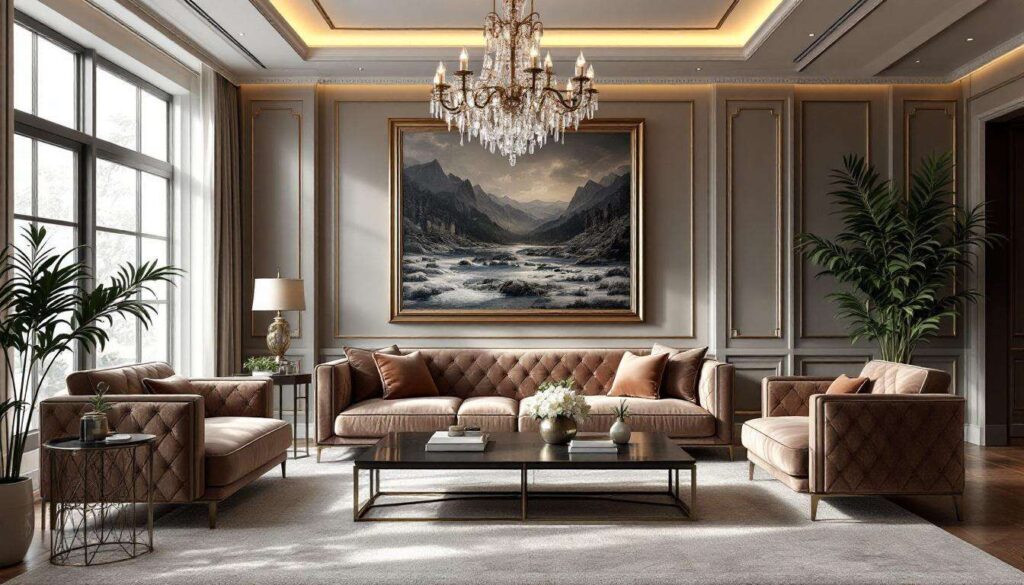
Neutral colour schemes form the backbone of expensive-looking interiors. Designers favour palettes built around whites, creams, greys, and beiges because these colours create a sense of calm sophistication whilst allowing architectural features and quality materials to take centre stage. A neutral foundation also provides timeless appeal that transcends trends, a hallmark of truly luxurious spaces.
Adding depth through tonal variation
The misconception that neutral means monotonous couldn’t be further from design reality. Professional designers create richness by layering multiple shades within the same colour family. A room might feature:
- Walls in a soft greige (grey-beige hybrid)
- Upholstery in deeper taupe tones
- Cushions and throws in cream and ivory
- Flooring in warm oak or cool grey stone
- Metallic accents in brass, bronze, or brushed nickel
This layered approach creates visual interest and dimension whilst maintaining the sophisticated restraint that characterises expensive interiors.
Strategic colour accents
When designers do introduce colour into neutral schemes, they do so with intention and restraint. Rather than scattering colour randomly, they might select a single accent hue and repeat it in two or three carefully chosen locations. This creates cohesion and demonstrates the thoughtful curation associated with professionally designed spaces. Deep jewel tones like emerald, sapphire, or burgundy work particularly well as they convey richness without overwhelming the space.
With a sophisticated colour foundation established, designers then consider how art can punctuate and personalise the space whilst reinforcing its luxurious character.
Adding touches of art
Scaling artwork appropriately
Nothing diminishes a room’s impact quite like undersized artwork floating on expansive walls. Designers select or create gallery walls with proper scale relationships between art and wall space. A substantial piece above a sofa should typically span two-thirds to three-quarters of the furniture’s width. When budget constraints limit access to large original pieces, designers often opt for oversized prints in quality frames or create impact through gallery wall arrangements.
Framing with intention
The frame matters as much as the artwork itself. Professional framing with quality materials elevates even modest prints to gallery-worthy status. Designers typically choose frames that complement the room’s overall aesthetic:
- Simple black or white frames for modern, minimalist spaces
- Ornate gilt frames for traditional or maximalist interiors
- Natural wood frames for organic, Scandinavian-inspired rooms
- Matching frame styles throughout a space for cohesion
Curating meaningful collections
Expensive-looking spaces feel personally curated rather than generically decorated. Designers help clients display collections, photography, or artwork that tells a story or reflects genuine interests. Whether it’s a series of botanical prints, travel photography, or abstract paintings, the key lies in thoughtful arrangement and consistency of theme or style. This approach creates the impression of a space that has evolved over time rather than being furnished in a single shopping trip.
Whilst art adds personality and visual interest to walls, the furniture that fills the floor space requires equally strategic consideration to maximise both function and perceived value.
Optimising space with bespoke furniture
Embracing custom solutions
Built-in furniture and bespoke joinery represent the pinnacle of luxury interior design. Whilst truly custom cabinetry requires investment, designers achieve similar effects through creative adaptations. Alcoves fitted with shelving, window seats with integrated storage, or custom-sized console tables that perfectly fit specific spaces all convey the tailored precision associated with high-end interiors.
Selecting appropriately scaled pieces
Furniture that properly fits a room’s proportions immediately elevates its appearance. Oversized furniture in small rooms creates cramped conditions, whilst undersized pieces in large spaces appear lost and insignificant. Designers carefully measure spaces and select furniture with appropriate dimensions:
| Room size | Sofa length | Coffee table proportion |
|---|---|---|
| Small (under 250 sq ft) | 72-78 inches | Half to two-thirds sofa length |
| Medium (250-400 sq ft) | 84-90 inches | Two-thirds sofa length |
| Large (over 400 sq ft) | 96+ inches or sectional | Two-thirds to three-quarters sofa length |
Prioritising quality over quantity
Expensive-looking rooms often contain fewer, better-quality pieces rather than numerous mediocre items. Designers advocate for investing in well-constructed furniture with solid frames, quality upholstery, and timeless silhouettes. A single exceptional sofa makes a stronger statement than multiple cheap pieces, and the improved comfort and longevity justify the investment. This principle of considered restraint prevents spaces from appearing cluttered or chaotic.
Once the foundational furniture establishes the room’s structure and flow, carefully selected accessories provide the finishing touches that complete the luxurious impression.
Creating focal points with accessories
Styling surfaces strategically
Designers approach accessory placement with the same rigour they apply to major design decisions. Rather than scattering decorative objects randomly, they create intentional vignettes on surfaces like coffee tables, console tables, and shelving. The classic designer formula involves grouping items in odd numbers (typically three or five) with varying heights and textures. A stack of beautiful books, a sculptural object, and a small plant create more impact than numerous small trinkets.
Investing in statement pieces
Every room benefits from at least one conversation-starting element that draws the eye and anchors the design. This might include:
- An oversized table lamp with an architectural base
- A dramatic vase or sculptural bowl
- Luxurious throws in cashmere, mohair, or faux fur
- Substantial coffee table books on design, art, or photography
- Fresh flowers or high-quality faux botanicals in elegant vessels
These focal accessories communicate that attention has been paid to every detail, a characteristic of genuinely luxurious spaces.
Maintaining edited displays
Perhaps counterintuitively, expensive-looking rooms often feature relatively sparse accessorising. Designers understand that visual breathing room allows each carefully chosen object to make its full impact. They regularly edit displays, removing items that no longer serve the overall aesthetic and resisting the temptation to fill every surface. This restraint creates the sophisticated, uncluttered appearance associated with high-end interior design and demonstrates confidence in the selected pieces.
Achieving an expensive-looking interior ultimately relies on these interconnected strategies working in harmony. Natural light sets the stage, quality materials provide substance, neutral colours create sophistication, art adds personality, well-scaled furniture establishes function, and thoughtful accessories complete the vision. Each element reinforces the others, creating spaces that appear far more costly than their actual budgets might suggest. The true luxury lies not in price tags but in the thoughtful curation and attention to detail that professional designers bring to every project, principles that anyone can apply to transform their own spaces into sophisticated sanctuaries.