
Walk into any gathering and you’ll quickly spot the difference between a well-designed space and one that feels chaotic. Professional designers possess a trained eye that picks up on subtle yet significant layout flaws that can transform a pleasant evening into an uncomfortable experience. From cramped circulation routes to harsh lighting that casts unflattering shadows, these issues don’t go unnoticed by those who work with spatial design daily. Understanding what catches their attention can help you create a more inviting environment for your next social event.
Space arrangement: creating a smooth flow
Understanding circulation patterns
Designers immediately notice when traffic flow becomes congested or awkward. A well-arranged space allows guests to move naturally between different areas without bumping into furniture or each other. The key lies in establishing clear pathways that connect essential zones such as the entrance, refreshment areas, and seating arrangements.
Consider these fundamental principles for optimal circulation:
- maintain a minimum pathway width of 90 centimetres for single-file movement
- create wider corridors of 120-150 centimetres in high-traffic areas
- avoid placing furniture directly in natural walking routes
- position focal points strategically to guide movement patterns
Zoning for different activities
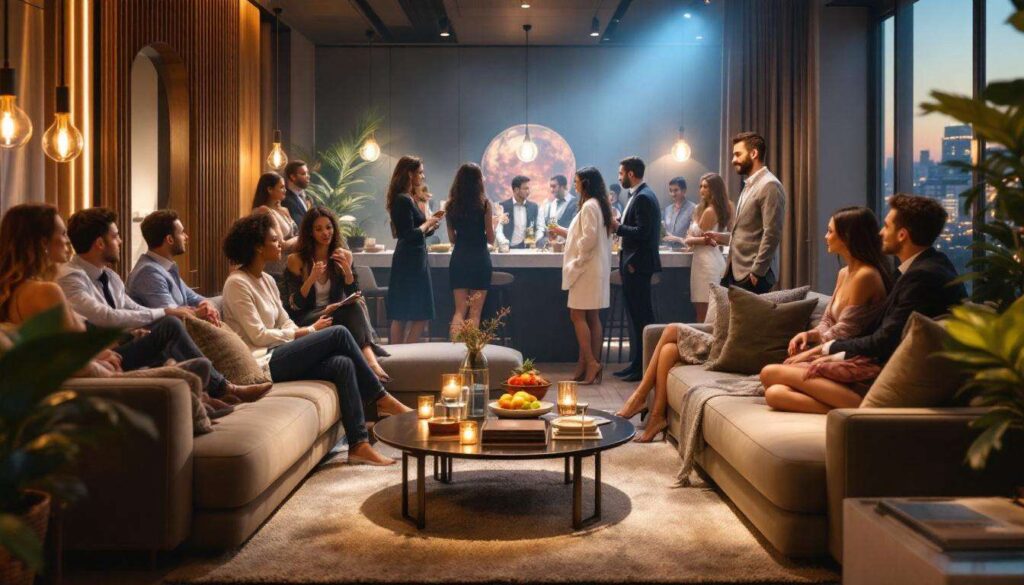
Effective space planning involves creating distinct zones for various activities without physical barriers. Designers achieve this through furniture placement, lighting variations, and subtle floor covering changes. A conversation area should feel separate from the dining space, whilst still maintaining visual connectivity throughout the venue.
| Zone Type | Recommended Space | Key Features |
|---|---|---|
| Conversation area | 2.5-3 square metres per person | Intimate seating, lower lighting |
| Dining space | 1.5-2 square metres per person | Table access, bright task lighting |
| Circulation zones | 1 square metre per person | Clear pathways, minimal obstacles |
Once you’ve established proper flow patterns, the next consideration involves how individual pieces interact with the space and each other.
Furniture placement: avoiding obstacles
Strategic positioning for functionality
Nothing frustrates designers more than poorly positioned furniture that creates bottlenecks or dead spaces. Each piece should serve a purpose whilst contributing to the overall spatial harmony. Furniture arrangement directly impacts how comfortably guests can interact and move throughout the venue.
Common placement mistakes include:
- pushing all furniture against walls, creating an empty centre
- blocking windows or architectural features
- placing seating too far apart for comfortable conversation
- creating isolated furniture islands with no clear purpose
Balancing accessibility and intimacy
The ideal arrangement strikes a balance between accessibility and creating cosy gathering spots. Seating groups should be positioned 1.5 to 2.5 metres apart to facilitate conversation without shouting. Tables for drinks and refreshments need to sit within easy reach, typically no more than 45 centimetres from seating areas.
Beyond physical placement, the way light interacts with your space dramatically affects the overall atmosphere.
Lighting: adjusting the luminous atmosphere
Layering light sources effectively
Designers immediately recognise spaces that rely solely on overhead lighting, which creates harsh shadows and an uninviting atmosphere. Proper lighting design incorporates multiple layers: ambient, task, and accent lighting working together to create depth and warmth.
Essential lighting layers include:
- ambient lighting providing overall illumination at 150-300 lux
- task lighting for specific activities at 300-500 lux
- accent lighting highlighting architectural features or artwork
- decorative lighting adding visual interest and personality
Adjusting intensity and colour temperature
The colour temperature of lighting significantly impacts mood. Warm white light (2700-3000K) creates an intimate, relaxing atmosphere ideal for social gatherings, whilst cooler temperatures feel clinical and uninviting. Dimmer switches allow you to adjust intensity throughout the evening, starting brighter for arrivals and lowering as the event progresses.
Whilst lighting sets the visual mood, sound quality equally influences the comfort level of your guests.
Acoustics: controlling the noise level
Managing sound reflection and absorption
Hard surfaces like bare walls, wooden floors, and large windows create excessive sound reflection that designers instantly detect. This results in a cacophony where conversations become difficult and guests must raise their voices, further amplifying the problem. Acoustic treatment doesn’t require professional equipment; simple additions can dramatically improve sound quality.
Effective sound-absorbing elements:
- fabric curtains or drapes covering reflective surfaces
- upholstered furniture reducing sound bounce
- area rugs dampening floor-level noise
- wall hangings and tapestries absorbing mid-range frequencies
Background music considerations
When incorporating background music, volume control becomes crucial. Sound levels should remain at 60-70 decibels, allowing conversation without strain. Position speakers strategically to distribute sound evenly rather than concentrating it in specific areas, and avoid placing them near reflective surfaces that amplify volume.
Creating the right acoustic environment naturally leads to considering where guests can retreat for quieter moments.
Relaxation areas: optimising comfort
Designating quiet zones
Experienced designers recognise the importance of retreat spaces where guests can escape the main activity temporarily. These relaxation areas provide psychological relief and prevent social fatigue, making events more enjoyable for introverts and those needing brief respites.
Key features of effective quiet zones:
- positioned away from high-traffic areas and loudspeakers
- comfortable seating with back support
- softer, more intimate lighting levels
- visual separation through plants, screens, or furniture arrangement
Ensuring physical comfort
Comfort extends beyond seating choices. Temperature control, air circulation, and access to refreshments in relaxation areas demonstrate thoughtful planning. Provide a variety of seating options including chairs with arms for older guests and lower seating for casual conversation. Side tables within reach eliminate the need to hold drinks constantly.
These comfort considerations work best when they complement rather than clash with your overall aesthetic vision.
Decor and theme: ensuring visual harmony
Maintaining colour cohesion
Designers quickly spot colour clashes and inconsistent styling that create visual chaos. A successful party space employs a cohesive colour palette with two to three primary colours and one or two accent shades. This doesn’t mean everything must match perfectly, but elements should complement rather than compete with each other.
| Design Element | Common Mistake | Better Approach |
|---|---|---|
| Colour scheme | Too many competing colours | Stick to 3-5 coordinated shades |
| Decorative items | Overcrowding surfaces | Group items in odd numbers |
| Theme execution | Literal, heavy-handed approach | Subtle nods through accents |
Balancing theme and sophistication
Whilst themed parties can be delightful, overexecution often results in spaces that feel childish or overwhelming. Designers appreciate restraint: incorporating thematic elements through carefully chosen accents rather than transforming every surface. Select a few statement pieces that communicate your theme whilst maintaining an elegant foundation.
Consider these refinement strategies:
- use theme colours in subtle ways through linens and flowers
- select one or two focal decorative pieces rather than overwhelming every corner
- maintain quality over quantity in decorative choices
- ensure decorations don’t obstruct sightlines or conversation
Professional designers notice layout issues because they understand how spatial elements work together to create comfortable, functional environments. By addressing circulation flow, furniture placement, lighting quality, acoustic comfort, relaxation opportunities, and visual harmony, you can transform your party space from merely adequate to genuinely impressive. These improvements don’t require extensive budgets or professional intervention; they simply demand attention to how people naturally interact with their surroundings. Implementing even a few of these adjustments will elevate your hosting skills and ensure your guests remember your events for all the right reasons.