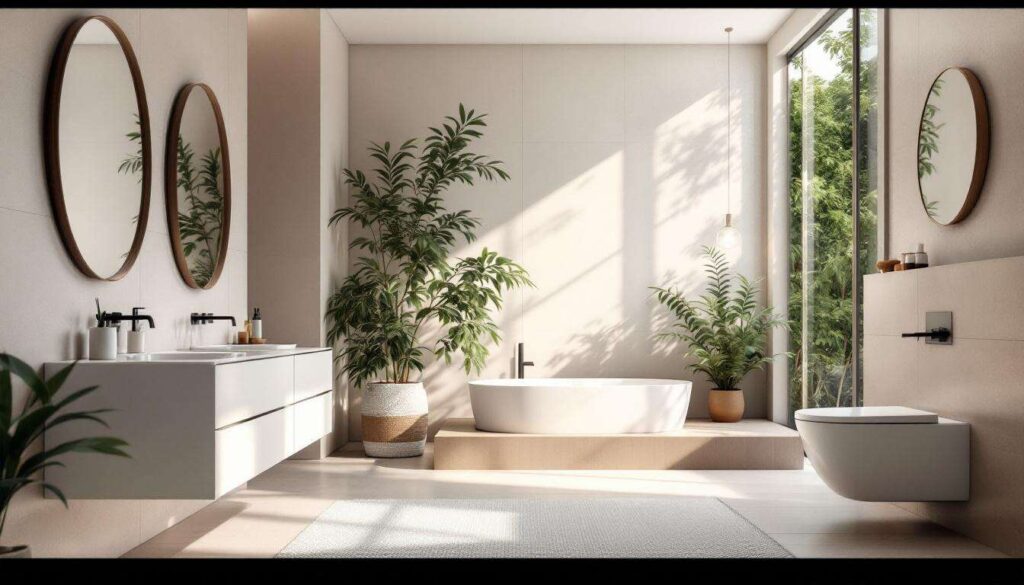
Bathroom design continues to evolve, blending aesthetic innovation with functional sophistication. The trends emerging for the coming years reflect a desire for spaces that combine visual appeal with practical intelligence, where every element serves both form and function. From suspended furniture to technological integration, these developments signal a shift towards bathrooms that feel more like personal sanctuaries than purely utilitarian spaces.
Floating Vanities: modern Elegance in the Bathroom
The Visual Impact of Suspended Design
Floating vanities have transformed from a niche architectural choice into a mainstream design solution that addresses multiple aesthetic and practical concerns. By mounting cabinets directly to the wall without visible floor support, these fixtures create an illusion of expanded space that proves particularly valuable in smaller bathrooms. The gap between floor and cabinet allows light to travel beneath the unit, making rooms feel larger and more open whilst simultaneously simplifying cleaning routines.
Material and Finish Options
Contemporary floating vanities showcase diverse material choices that cater to various design preferences:
- Natural wood veneers offering warmth and organic texture
- High-gloss lacquered finishes for a sleek, modern appearance
- Matte surfaces that resist fingerprints and water marks
- Concrete-effect materials providing industrial character
Storage Solutions Within Floating Designs
Despite their streamlined appearance, modern floating vanities incorporate intelligent storage configurations including soft-close drawers, integrated electrical outlets, and compartmentalised sections for toiletries. Manufacturers have developed mounting systems capable of supporting substantial weight, allowing these units to accommodate both storage needs and integrated basins without compromising structural integrity.
This emphasis on suspended elements naturally extends beyond vanities to other bathroom features, creating cohesive design schemes that prioritise both visual lightness and chromatic harmony.
Pastel Tones: the Chromatic Softness of 2026
Moving Beyond Stark White Bathrooms
The dominance of clinical white bathrooms faces a gentle challenge from pastel colour palettes that introduce warmth without overwhelming spaces. Soft shades of sage green, dusty pink, powder blue, and muted terracotta create calming environments that feel both contemporary and timeless. These hues work particularly effectively when applied to specific zones rather than entire rooms, allowing for subtle colour blocking that adds visual interest without sacrificing the sense of spaciousness.
Application Strategies for Pastel Tones
| Application Area | Recommended Approach | Visual Effect |
|---|---|---|
| Wall tiles | Feature wall or half-height installation | Creates focal point without overwhelming |
| Cabinetry | Vanity fronts in soft hues | Adds personality whilst maintaining flexibility |
| Fixtures | Coloured basins or bathtubs | Makes bold statement with single element |
| Accessories | Towels, storage containers, artwork | Easily changeable seasonal updates |
Combining Pastels with Neutral Foundations
The most successful pastel bathroom schemes pair soft colours with neutral foundations such as warm grey, beige, or off-white. This approach prevents spaces from feeling overly saccharine whilst allowing the pastel elements to provide just enough chromatic interest. Natural materials like light wood, rattan, and stone complement pastel tones beautifully, creating layered schemes that feel sophisticated rather than childish.
As colour choices become more nuanced, the technological capabilities within bathrooms advance in parallel, introducing smart features that enhance daily routines.
Connected Taps: when Technology Meets Sanitation
Touchless Operation and Hygiene Benefits
Connected tap technology has evolved beyond simple motion sensors to include voice activation, smartphone control, and programmable water delivery. These systems offer tangible hygiene advantages by eliminating the need to touch handles with soapy or contaminated hands. Advanced models feature precision temperature control that maintains consistent water temperature, preventing scalding whilst reducing water waste during the temperature adjustment period.
Water Conservation Through Smart Technology
Modern connected taps incorporate features specifically designed to reduce water consumption:
- Automatic shut-off timers that prevent taps being left running
- Flow rate adjustments based on detected usage patterns
- Usage tracking that provides consumption data via mobile applications
- Preset programmes for specific tasks like handwashing or tooth brushing
Integration with Broader Smart Home Systems
The most sophisticated connected taps function as components within comprehensive smart home ecosystems, communicating with water heaters to optimise energy usage and with leak detection systems to identify potential problems before they cause damage. Voice assistant compatibility allows users to activate taps, set temperatures, and dispense specific water volumes through simple verbal commands, proving particularly useful when hands are occupied.
This technological integration complements broader spatial considerations that reimagine how bathrooms function as living spaces.
Open Spaces: rethinking Circulation in the Bathroom
Breaking Down Traditional Bathroom Layouts
Contemporary bathroom design increasingly favours open-plan configurations that eliminate unnecessary partitions and create more fluid movement patterns. This approach challenges the traditional segregation of bathroom zones, instead creating multifunctional spaces where bathing, grooming, and relaxation areas flow seamlessly into one another. Glass partitions, half-walls, and strategic fixture placement maintain necessary privacy whilst preserving visual continuity.
Accessibility and Universal Design Principles
Open bathroom layouts naturally accommodate accessibility requirements more effectively than compartmentalised designs. Wider circulation spaces allow for wheelchair navigation, whilst the absence of thresholds and steps eliminates tripping hazards. These considerations benefit all users, not merely those with mobility limitations, creating bathrooms that feel more spacious and easier to navigate regardless of physical ability.
Zoning Without Walls
Designers achieve functional separation in open bathrooms through several techniques:
- Material transitions that define different zones
- Level changes such as sunken baths or raised shower platforms
- Strategic lighting that highlights specific areas
- Furniture placement that creates implied boundaries
These open configurations provide the perfect backdrop for introducing timeless materials that ground contemporary designs in classical elegance.
The Marble Comeback: a Classic Revisited for Modern Bathrooms
Contemporary Applications of Traditional Material
Marble has re-emerged as a premier bathroom material, though contemporary applications differ markedly from historical uses. Rather than covering entire rooms in matching marble, modern designs employ the stone strategically as accent features that provide visual impact without overwhelming spaces. Large-format slabs with dramatic veining serve as feature walls, whilst marble-topped vanities introduce luxury without the maintenance concerns associated with full marble installations.
Marble Varieties and Their Characteristics
| Marble Type | Colour Profile | Best Application |
|---|---|---|
| Carrara | White with grey veining | Flooring and wall cladding |
| Calacatta | White with bold gold/grey veins | Feature walls and vanity tops |
| Emperador | Brown with lighter veining | Accent panels and borders |
| Verde | Green with varied patterns | Statement pieces and niches |
Maintenance and Protection Technologies
Modern sealing technologies have addressed many traditional concerns about marble in wet environments. Advanced sealants penetrate the stone’s surface to provide protection against staining and etching whilst maintaining the material’s natural appearance. Regular resealing schedules, typically annual or biannual depending on usage, ensure marble surfaces retain their beauty throughout years of daily use. For those seeking marble’s aesthetic without maintenance requirements, high-quality porcelain tiles now replicate marble’s appearance with remarkable accuracy.
These bathroom trends collectively represent a design philosophy that values both aesthetic sophistication and practical functionality. Floating vanities maximise space whilst providing essential storage, pastel tones introduce warmth without compromising brightness, connected taps merge convenience with conservation, open layouts enhance accessibility and flow, and marble applications ground contemporary schemes in timeless elegance. Together, these elements create bathrooms that function as true sanctuaries, spaces where design excellence meets everyday practicality in harmonious balance.